

Views: 0
How Torque Vectoring Improves Supercar Handling
BIN3AIAH CARS | Automotive Technology & Engineering
Porsche 911 GT3 RS | Porsche Brazil
Audi RS5’s Electro-Mechanical Diff Powers a New Age For Quattro Driving Control
Porsche 911 GT3 RS | Porsche USA
8
In the world of supercars, engine power and acceleration are only part of the performance equation. The ability to navigate corners with precision, maintain traction and accelerate smoothly out of a bend is equally important.
One of the technologies responsible for these capabilities is torque vectoring — an advanced drivetrain and chassis-control technology that adjusts the driving forces at individual wheels to improve cornering, stability and responsiveness.
From high-performance combustion-engine cars to modern electric hypercars, torque vectoring helps drivers use available grip more effectively.
1. What Is Torque Vectoring?
Torque vectoring is a technology that controls how driving torque is distributed between a vehicle’s wheels.
In a conventional differential, wheel speeds can differ during a turn, but the system generally cannot independently command precisely how much driving torque each wheel receives.
An advanced torque-vectoring system can actively influence this distribution, helping the vehicle rotate toward the driver’s intended direction.
For example, when a supercar turns left, directing more driving torque to the right rear wheel can help the car rotate left, provided the tire has sufficient traction.
2. How Does Torque Vectoring Work?
Conceptual illustration: during a left turn, greater drive torque at the outside (right) rear wheel can generate a yaw moment that helps the car turn. Actual control depends on the drivetrain and conditions.
The process happens continuously through an electronic control system:
- Sensors monitor the car: Steering angle, wheel speeds, throttle position, acceleration and yaw rate are measured.
- The controller predicts the intended path: It compares the vehicle’s actual movement with the driver’s steering input.
- Torque is adjusted: Depending on the system, clutches, differentials, electric motors or selective braking change the forces at individual wheels.
- The car responds: The resulting difference in tire forces helps adjust rotation and maintain the desired cornering line.
Porsche explains that its torque-vectoring technology uses targeted braking and differential-locking functions to enhance steering precision and traction. Porsche Polska
3. The Major Benefits for Supercars
Ferrari LaFerrari Review – Automobile Magazine
Sharper corner entry
Helps reduce understeer and makes the car respond more accurately to steering input.
Ferrari to build 500th LaFerrari for Italian earthquake victims — New Car Net
Better corner-exit traction
Helps the drivetrain use available tire grip to accelerate more effectively out of bends.
Qu’apprend-t-on vraiment en Ferrari SF90 dans les pires conditions possibles ?
Improved stability
Helps manage unwanted vehicle rotation, especially when road grip varies.
Greater performance potential
Allows more precise control of cornering balance, potentially improving lap times when combined with suitable tires, suspension and driver inputs.
4. Three Types of Torque Vectoring
| Technology | How it works | Main advantage |
|---|---|---|
| Brake-based | Brakes individual wheels to create a turning effect | Relatively simple and cost-effective |
| Active differential | Uses electronically controlled clutches or differential mechanisms | Redistributes drive torque with less reliance on braking |
| Electric motor-based | Controls torque from independently driven wheels | Very fast, precise torque adjustments |
Electric systems can also use regenerative braking to create negative wheel torque, helping control the car’s rotation while recovering energy.
5. Real-World Supercar Examples
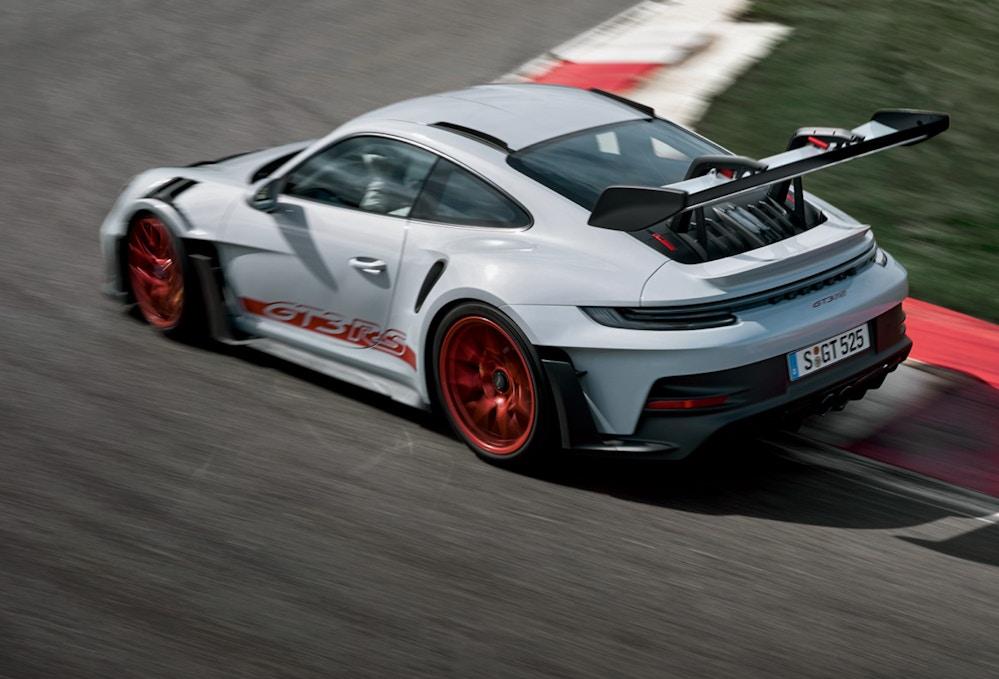
Stage de pilotage Porsche 992 GT3 Rs
Porsche 911 GT3 RS
Porsche Torque Vectoring systems use targeted rear-wheel braking and differential functions to improve cornering agility, traction and steering precision. Porsche Newsroom
Rimac Nevera (2022) | Reviews | Complete Car
Rimac Nevera
Its four independently driven wheels allow the R-AWTV system to adjust torque to each wheel over 100 times per second. Rimac Automobili
Lapping Massachusetts in a 2017 Acura NSX
Acura NSX
The Sport Hybrid SH-AWD system uses two front electric motors to create controlled turning forces, improving responsiveness through corners. Acura Newsroom
6. Torque Vectoring vs. Traditional Differentials
A traditional limited-slip differential (LSD) improves traction by limiting excessive differences in wheel speed.
Torque vectoring goes further by actively managing the distribution of driving or braking forces to influence vehicle handling.
| Feature | Traditional LSD | Active torque vectoring |
|---|---|---|
| Limits wheel-speed differences | Yes | System-dependent |
| Actively influences cornering rotation | Limited or indirect | Yes |
| Adapts to sensor inputs | Mechanical types generally do not | Yes |
| Improves traction | Yes | Yes |
| Independent wheel control | Generally no | Possible |
Importantly, torque vectoring does not create unlimited grip. Tires, road conditions, vehicle weight, suspension and aerodynamics still determine the available traction.
7. The Future of Torque Vectoring
As electric hypercars develop, torque-vectoring technology is becoming increasingly sophisticated.
Independent electric motors can provide rapid changes in driving and regenerative-braking torque, while advanced control software coordinates these changes with steering, traction and stability systems.
Rimac’s electric hypercars demonstrate how software-controlled torque distribution can deliver different handling characteristics, from stability-focused road driving to more aggressive track settings. Rimac Automobili
Conclusion
Torque vectoring is one of the most important advances in modern performance-car handling. Rather than simply sending power to the wheels, it helps determine where and how that power should be applied.
The result is sharper steering response, better control through corners and more effective acceleration when exiting a bend.
Supercar performance is no longer only about how much power an engine produces — it is also about how intelligently that power reaches the road.
SEO Package — Bin3aiah Cars
SEO Title
Copy
How Torque Vectoring Improves Supercar HandlingSlug
Copy
how-torque-vectoring-improves-supercar-handlingMeta Description
Copy
Discover how torque vectoring improves supercar cornering, traction and stability, with examples from Porsche, Acura NSX and Rimac Nevera.Focus Keyword
Copy
torque vectoring in supercarsCategory
Copy
Automotive TechnologyExcerpt
Copy
Learn how advanced torque-vectoring systems help supercars corner faster, improve traction and deliver more precise handling.
Suggested tags: Torque Vectoring, Supercar Handling, Automotive Engineering, Performance Cars, Active Differential, Vehicle Dynamics, Porsche, Acura NSX, Rimac Nevera, Electric Hypercars, Cornering Technology, Traction Control.
Suggested internal links: Supercar Engineering, How Hypercar Drivetrains Work, Electric Hypercar Technology, Carbon-Fibre Monocoques.
Official references: Porsche torque vectoring explained, Rimac Nevera engineering and Acura Sport Hybrid SH-AWD.