
Views: 1
How Dual-Clutch Transmissions Work in Performance Cars
AUTOMOTIVE ENGINEERING | PERFORMANCE TECHNOLOGY
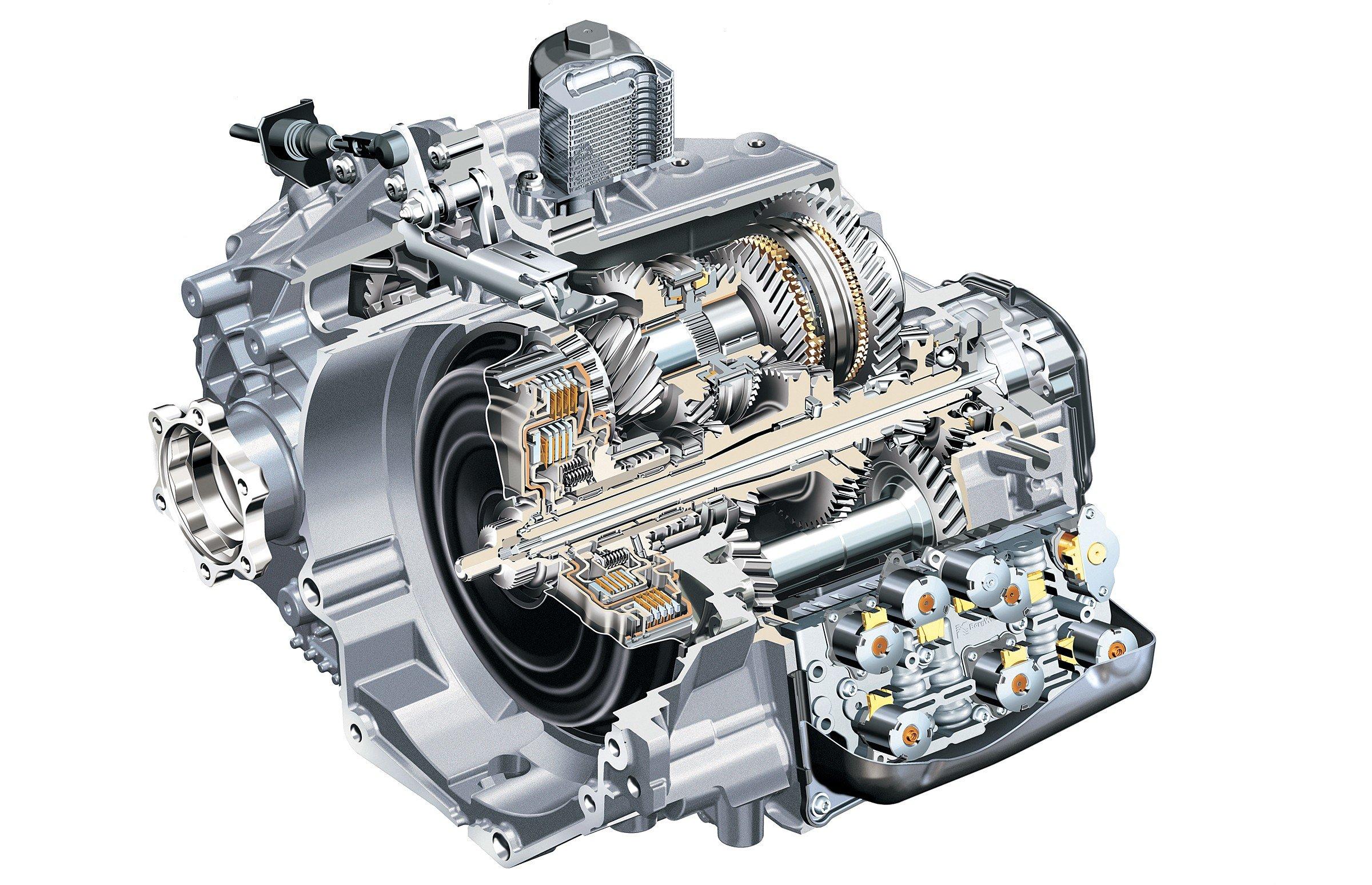
A dual-clutch transmission (DCT) is one of the most important technologies in modern performance cars. It combines the efficiency and direct mechanical connection of a manual gearbox with the convenience of automatic shifting.
Unlike a traditional automatic transmission, a DCT uses two separate clutches to prepare the next gear before the current gear is disengaged. This allows exceptionally fast gear changes with minimal interruption in power delivery.
Foto – L’ABC del cambio automatico: il doppia frizione o “DCT” – alVolante.it
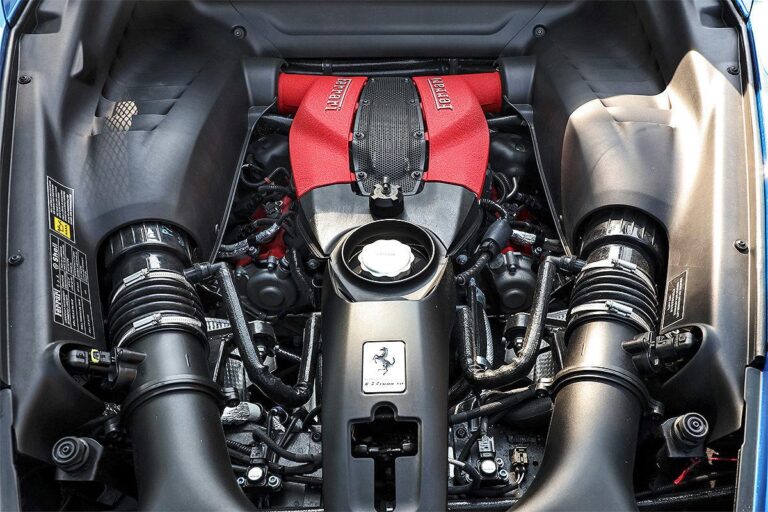
2020 Ferrari 488 Pista 3.9T V8 F1 DCT Previously Sold | European Prestige UK
6
1. How a Dual-Clutch Transmission Works
A typical DCT contains two concentric input shafts connected to two independent clutches.
- Clutch 1: Controls odd-numbered gears — 1st, 3rd, 5th and usually 7th.
- Clutch 2: Controls even-numbered gears — 2nd, 4th and 6th, with reverse assigned according to the design.
When the vehicle accelerates in first gear, the gearbox can already engage second gear on the other shaft. During the upshift, one clutch releases as the other engages.
Simplified DCT power flowConceptual diagram: first gear drives the car while second gear is preselected. Actual transmission layouts are more complex.
2. What Happens During a Gear Shift?
Step 1 — Accelerating in first gear
Clutch 1 transmits engine power through first gear. Second gear is already selected on the other shaft.
Step 2 — The shift begins
The control unit coordinates engine torque and clutch pressure. Clutch 1 starts to release while Clutch 2 begins engaging.
Step 3 — Second gear takes over
Engine torque transfers to the second input shaft, producing a rapid, smooth change in gear ratio.
Step 4 — The next gear is prepared
Third gear can now be preselected, allowing the process to repeat during acceleration.
The fastest DCT shifts can complete in a small fraction of a second, although actual shift times vary by transmission, driving mode and how they are measured.
3. Why Performance Cars Use DCTs
Rapid shifts
Gear changes can take just milliseconds, improving acceleration.
Continuous acceleration
Minimal torque interruption helps maintain momentum.
High efficiency
A direct mechanical power path can reduce drivetrain losses.
Precision control
Electronic systems coordinate gear selection, clutch engagement and engine torque.
ZF describes dual-clutch systems with shift strategies ranging from sporty to comfortable, including shift durations around 100–300 milliseconds in its documented applications. Powerful shifting
4. Wet vs. Dry Dual Clutches
| Feature | Wet clutch | Dry clutch |
|---|---|---|
| Cooling | Oil-cooled | Primarily air-cooled |
| Heat management | Better under sustained load | More limited |
| Efficiency | Some oil-related drag | Lower clutch drag |
| Common applications | High-torque performance vehicles | Lower-torque passenger cars |
| Complexity | More cooling and lubrication hardware | Generally simpler clutch cooling |
High-performance transmissions frequently use wet multi-plate clutches because they can manage substantial torque and dissipate heat during demanding driving.
5. Performance Cars Using Dual-Clutch Technology
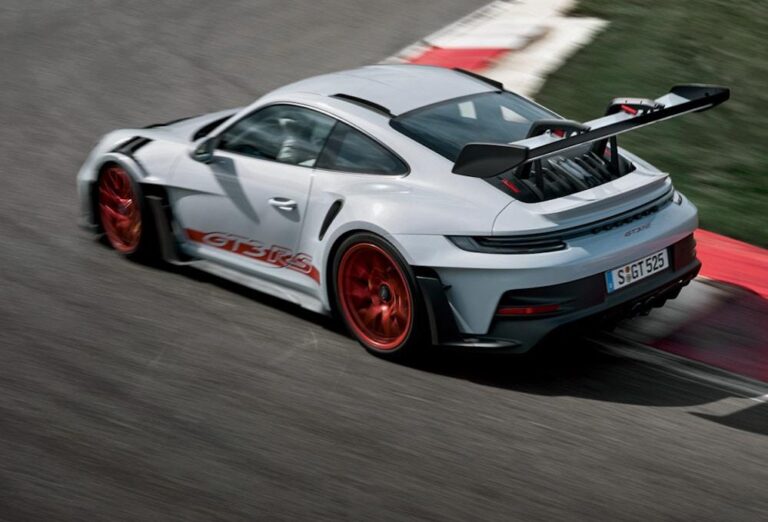
The 2023 Porsche 911 GT3 RS Is Race-Car Fast, But Approachable For Anybody
Porsche 911 GT3 RS — PDK
Porsche’s dual-clutch system is engineered for rapid shifts, precise control and track performance.
Ferrari 296 GTB — 8-speed DCT
Works alongside the hybrid powertrain to deliver rapid gear changes and strong acceleration.
McLaren 750S (2023) mit 750 PS geht in 2,8 Sekunden auf Tempo 100
McLaren 750S — 7-speed SSG
Uses a dual-clutch Seamless Shift Gearbox designed for responsive supercar driving.
The new BMW M4 Competition Coupé, Portimao Blue (03/2021).
BMW M4 F82 — 7-speed M DCT
Previous-generation M4 models offered an M dual-clutch transmission. The newer G82 M4 uses a conventional 8-speed automatic instead.
6. DCT vs. Other Transmissions
| Feature | Manual | DCT | Torque-converter automatic |
|---|---|---|---|
| Clutch operation | Driver-controlled | Automated dual clutch | Torque converter with internal clutches |
| Shift speed | Driver-dependent | Very fast | Fast in modern performance units |
| Driver involvement | High | Paddle-shift control | Paddle-shift control possible |
| Low-speed smoothness | Driver-dependent | Can feel hesitant | Often very smooth |
| Heat sensitivity in traffic | Clutch wear possible | Clutch heat possible | Fluid heat management needed |
A DCT is not automatically superior to every modern automatic. High-performance torque-converter transmissions can also deliver extremely fast shifts while offering excellent everyday drivability.
7. Limitations of Dual-Clutch Transmissions
Despite their advantages, DCTs have several challenges:
- Low-speed hesitation: Parking, crawling traffic and reversing may require controlled clutch slipping.
- Heat buildup: Repeated launches and prolonged slipping generate heat.
- Maintenance costs: Complex mechatronics, clutch assemblies and lubrication systems can be expensive to repair.
- Shift prediction: If the driver suddenly requests a gear different from the one preselected, the transmission may take longer to respond.
8. From Racing to Road Cars
Porsche began developing its PDK technology for motorsport during the early 1980s. It proved effective in endurance racing before reaching production road cars.
In 2008, Porsche introduced a seven-speed PDK option for the 911 Carrera and Carrera S, marking an important step toward widespread adoption of dual-clutch technology in high-performance road vehicles. Porsche Newsroom+1
Conclusion
The dual-clutch transmission is a remarkable example of mechanical engineering working alongside electronic control. By dividing the gears between two independently operated clutches, it allows the next ratio to be prepared while the vehicle continues accelerating.
For performance cars, this means faster shifts, more consistent acceleration and a closer connection between engine power and the road.
The defining principle is simple: one clutch drives the car while the other prepares the next gear.
WordPress SEO — Ready to Use
SEO TITLE
How Dual-Clutch Transmissions Work in Performance Cars
SLUG
how-dual-clutch-transmissions-work Copy
META DESCRIPTION
Discover how dual-clutch transmissions work, why DCT gearboxes shift so quickly, and how Porsche, Ferrari and McLaren use them in performance cars.
Copy
CATEGORY
Automotive Technology / Engineering
TAGS Copy all
Dual-Clutch Transmission
DCT
How DCT Works
Performance Cars
Automotive Engineering
Porsche PDK
Ferrari DCT
McLaren SSG
Gearbox Technology
Wet Clutch
Dry Clutch
Sports Car Technology
Automatic Transmission
Transmission Engineering
Car Technology
Suggested featured image: a detailed cutaway of a modern dual-clutch gearbox showing two clutches, input shafts, gears and power flow, with the title “HOW DUAL-CLUTCH TRANSMISSIONS WORK”.