

Views: 2
MOTORS WEBSITE • AUTOMOTIVE ENGINEERING • TECHNICAL FEATURE
Carbon-Fibre Monocoques: How Hypercars Are Built
Inside the extraordinary engineering process that creates the lightweight, ultra-rigid structural heart of the world’s fastest cars.


13
When you look at a Bugatti Chiron, McLaren P1, or Koenigsegg Jesko, the first things you notice are usually their dramatic shapes, enormous power outputs, and extraordinary performance.
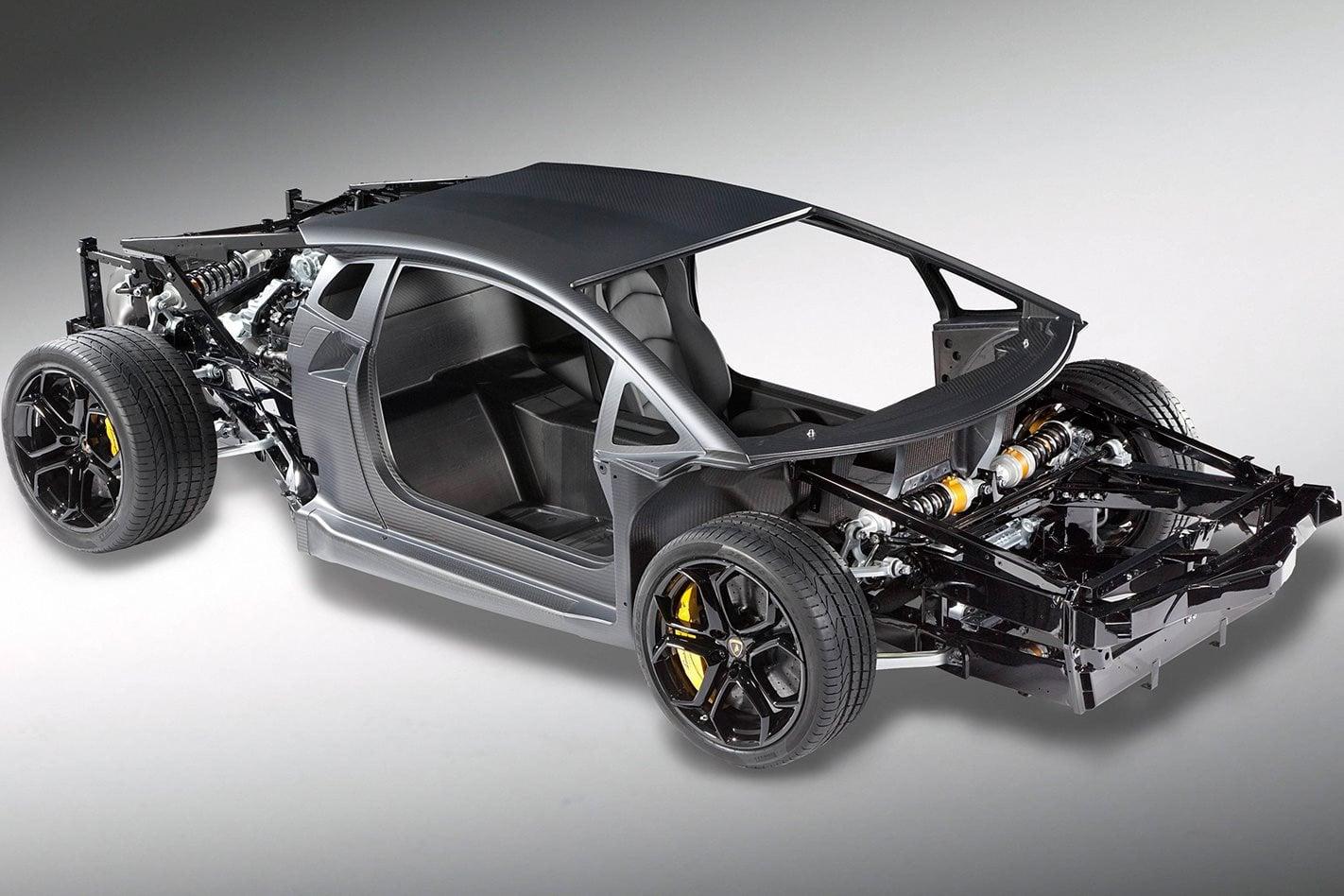
But beneath the bodywork lies something arguably more important: the carbon-fibre monocoque.
This sophisticated structural shell forms the foundation of many modern hypercars. It helps protect occupants, carries major vehicle loads, and provides the stiffness engineers need for precise suspension control.
Unlike a conventional vehicle built around a largely metal structure, a carbon-fibre monocoque uses carefully arranged layers of composite material to achieve exceptional strength and stiffness relative to its weight.
1. What exactly is a carbon-fibre monocoque?

A monocoque is a construction approach in which the outer structural shell carries significant loads, rather than relying on a completely separate ladder-type frame.
In hypercars, the central passenger compartment is often built as a carbon-composite safety cell, with front and rear structures attached to support the drivetrain, suspension, and crash systems.
The composite itself usually combines two materials:
- Carbon fibres: provide high tensile strength and directional stiffness.
- Polymer resin: binds the fibres together, transfers loads between them, and maintains the component’s shape.
The resulting material is known as carbon-fibre-reinforced polymer, or CFRP.
Because engineers can control how fibres are oriented, they can reinforce the structure in the directions where it needs to resist the greatest forces.
2. Why hypercars use carbon fibre
Low weight
Reduces mass without sacrificing the required structural performance.
Occupant protection
A properly engineered passenger cell maintains a protective survival space.
High stiffness
Limits unwanted chassis deformation under cornering and braking loads.
Design flexibility
Allows complex structural shapes and carefully positioned reinforcement.
Carbon fibre is not automatically superior in every situation. It is expensive, its properties depend strongly on fibre direction, and impact damage can require specialised inspection and repairs.
Its advantage comes from carefully optimising the complete structure, not simply substituting carbon fibre for metal.
3. How a carbon-fibre monocoque is manufactured
The following illustrates a common prepreg-and-autoclave manufacturing process. Actual methods vary between manufacturers.

Step 1 — Digital engineering
Engineers create a three-dimensional chassis model, simulate structural loads using finite-element analysis, and design the composite ply schedule.

Step 2 — Cutting the carbon fibre
Carbon-fibre prepreg sheets are cut into carefully defined patterns. Each piece has a specified orientation and position.

Step 3 — Layering the mould
Skilled technicians or automated systems position carbon-fibre layers inside precision moulds. Some structures also incorporate lightweight honeycomb or foam cores.

Step 4 — Vacuum bagging and curing
The layup is typically vacuum-bagged and cured under controlled temperature and pressure in an autoclave. The resin hardens to form a consolidated composite structure.

Step 5 — Inspection and finishing
Engineers trim, machine, bond, and inspect the components. Non-destructive testing can identify internal defects or bonding problems.
Step 6 — Vehicle integration
The finished passenger cell becomes the foundation for attaching subframes, suspension, drivetrain components, wiring, interior fittings, and body panels.
The process can be extraordinarily labour-intensive. McLaren has described a Formula 1 monocoque manufacturing process involving hundreds of laminating operations, repeated vacuum treatments, and multiple curing cycles.
McLaren
+1
An important distinction: not every production hypercar monocoque uses the same curing process. Some manufacturers employ resin-transfer moulding and other methods designed for faster, more repeatable production.
4. Real-world examples: three approaches to carbon construction
McLaren — The carbon-fibre pioneer
McLaren brought carbon-fibre chassis construction into Formula 1 with the MP4/1 in 1981 and later introduced a carbon monocoque to its F1 road car.
Its modern Artura architecture integrates structural protection for the hybrid battery, while the W1’s Aerocell design combines lightweight construction with aerodynamic packaging.
Alliance for Automotive Innovation
+1

Bugatti — Extreme structural engineering
The Chiron uses a carbon-fibre monocoque with an exceptionally rigid structure engineered for high-speed stability and crash protection.
Bugatti stated that manufacturing one Chiron monocoque took approximately four weeks. The company also uses carbon composites extensively in its exterior bodywork.
Bugatti Newsroom
+1
Koenigsegg — Handcrafted lightweight engineering
Koenigsegg manufactures specialised composite components in-house. Its carbon monocoque designs demonstrate how advanced structures can combine passenger protection, packaging, and high torsional rigidity.
For example, the company’s CCGT1 specification lists a carbon monocoque with an aluminium honeycomb core and integrated fuel tanks.
Koenigsegg
+1
5. Carbon-fibre monocoque vs traditional metal structures
| Characteristic | Carbon-fibre monocoque | Steel/aluminium structures |
|---|---|---|
| Weight efficiency | Excellent when optimised | Good to excellent |
| Structural stiffness | Highly tailorable | Dependent on design |
| Manufacturing cost | Generally high | Generally lower at scale |
| Crash engineering | Requires specialised composite design | Established metal deformation methods |
| Repairability | Specialised inspection and repair | Often more conventional |
| Production complexity | High | Varies by construction |
The distinction is not that carbon fibre is universally stronger than metal. Engineers optimise different materials for different failure modes, manufacturing requirements, costs, and vehicle designs.
6. How carbon-fibre structures protect occupants

In a serious collision, the goal is not to keep every component perfectly rigid.
The central passenger cell should resist intrusion, while designated impact structures absorb collision energy in a controlled manner. Some hypercars use separate, replaceable crash structures attached to the monocoque.
A well-engineered carbon-fibre structure can provide excellent occupant protection, but safety depends on the entire vehicle design, restraints, crash structures, joints, and testing—not the material alone.
7. The future of hypercar chassis manufacturing
The next developments are likely to focus on producing complex composite structures more efficiently while maintaining their performance.
Manufacturers are already exploring faster production processes, improved automated fibre placement, reduced material waste, and architectures designed around hybrid and electric drivetrains.
McLaren’s composites programme illustrates this direction through automated preforming and more integrated chassis manufacturing.
AMRC
+1
Conclusion
A hypercar’s extraordinary performance begins long before its engine starts.
Its carbon-fibre monocoque is the result of materials science, structural simulation, precision manufacturing, specialised craftsmanship, and extensive testing.
Every carefully positioned layer serves a purpose. Every reinforced section contributes to a greater engineering objective.
The monocoque is more than the skeleton of a hypercar. It is one of the technologies that makes modern hypercar performance possible.
Website publishing package
Article metadata
Ready for editorial review
| Suggested site | motors.bin3aiah.net |
| Category | Automotive Engineering / Technology |
| SEO title | Carbon-Fibre Monocoques: How Hypercars Are Built |
| Slug | carbon-fibre-monocoques-how-hypercars-are-built |
| Focus keyword | Carbon-fibre monocoque |
| Tags | Carbon Fibre, Hypercars, Chassis Engineering, McLaren, Bugatti, Koenigsegg, Composite Materials |
Meta description
Discover how carbon-fibre monocoques are designed, manufactured, and tested, and why they are central to modern hypercar engineering.
Technical sources and visual references
The following manufacturer and technical sources support the article and offer potential visual research material:
- McLaren Automotive — Engineering and Manufacturing
- Bugatti — Chiron Structural Engineering
- Koenigsegg — Composite Manufacturing
- Toray — Carbon Fibre Production Technology
Publication note: The article text is prepared, but it has not been uploaded to WordPress. Confirm licensing or obtain permission before reusing third-party photography on the website.