
Views: 2
The 1992 Jaguar XJ220 is a British supercar with two distinct stories: the V12, four-wheel-drive concept that astonished show visitors in 1988, and the twin-turbo V6 road car that reached customers in 1992. The finished machine deserves to be understood on its own terms. Its aluminium body, mid-engine layout and exceptional speed made it a landmark even though the production specification changed.
This guide covers the production road car, its development, racing connections and ownership considerations. The gallery shows a representative 1993 example, photographed from multiple angles, rather than claiming every photograph depicts a 1992-built car.
Jaguar XJ220 specifications
| Production period | 1992–1994 |
|---|---|
| Manufacturer | Jaguar Sport, the Jaguar and Tom Walkinshaw joint venture |
| Engine | 3,498 cc, 24-valve, twin-turbocharged TWR V6 |
| Published output | 542 hp in RM Sotheby’s 1992-car catalogue |
| Transmission | Five-speed manual |
| Drive | Rear-wheel drive |
| Suspension | Independent wishbones and coil springs, front and rear |
| Brakes | Four-wheel disc brakes |
| Body | Aluminium two-seat coupe |
| Production total | 281 in Jaguar Daimler Heritage Trust records; see note below |
Engine, transmission and chassis specifications are supported by RM Sotheby’s catalogue for a documented 1992 XJ220. A particular car’s equipment, modifications and condition still require individual verification.
From the Saturday Club to the production car
Jaguar chief engineer Jim Randle began developing the idea in the mid-1980s. A voluntary group of engineers and designers, later known as the Saturday Club, worked with suppliers to turn it into a physical car. Keith Helfet created the exterior shape. The concept appeared at Birmingham’s International Motor Show on 18 October 1988.
That original machine was an engineering showcase. Its V12 and prototype four-wheel-drive system drew on Jaguar’s racing experience, while the leather cabin retained a luxury-car connection. Strong interest prompted a feasibility study, and the production project received approval in late 1989.
The eventual road car used a different mechanical package: a twin-turbocharged V6, rear-wheel drive and manual transmission. Calling it simply the concept with a smaller engine misses the extent of that change. The production XJ220 was a separate development exercise, built around the practical demands of a small-volume road car.
Design: a long, low aluminium body
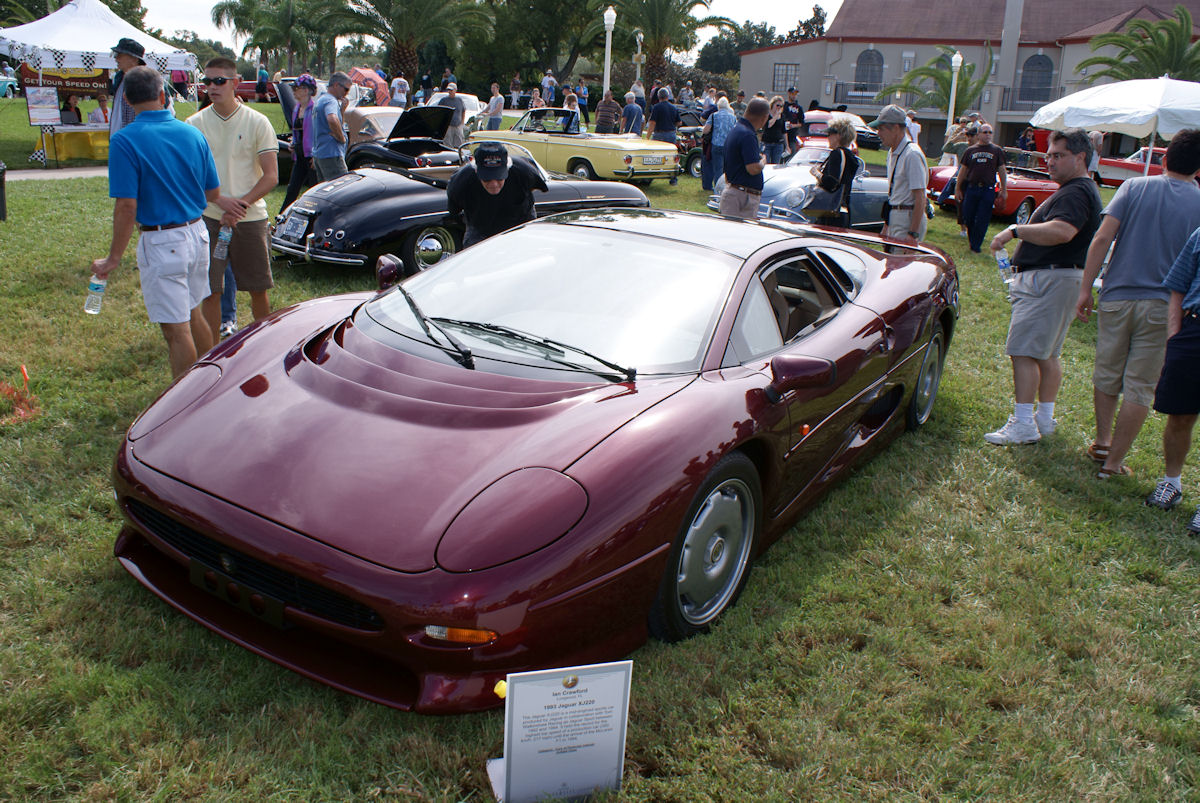
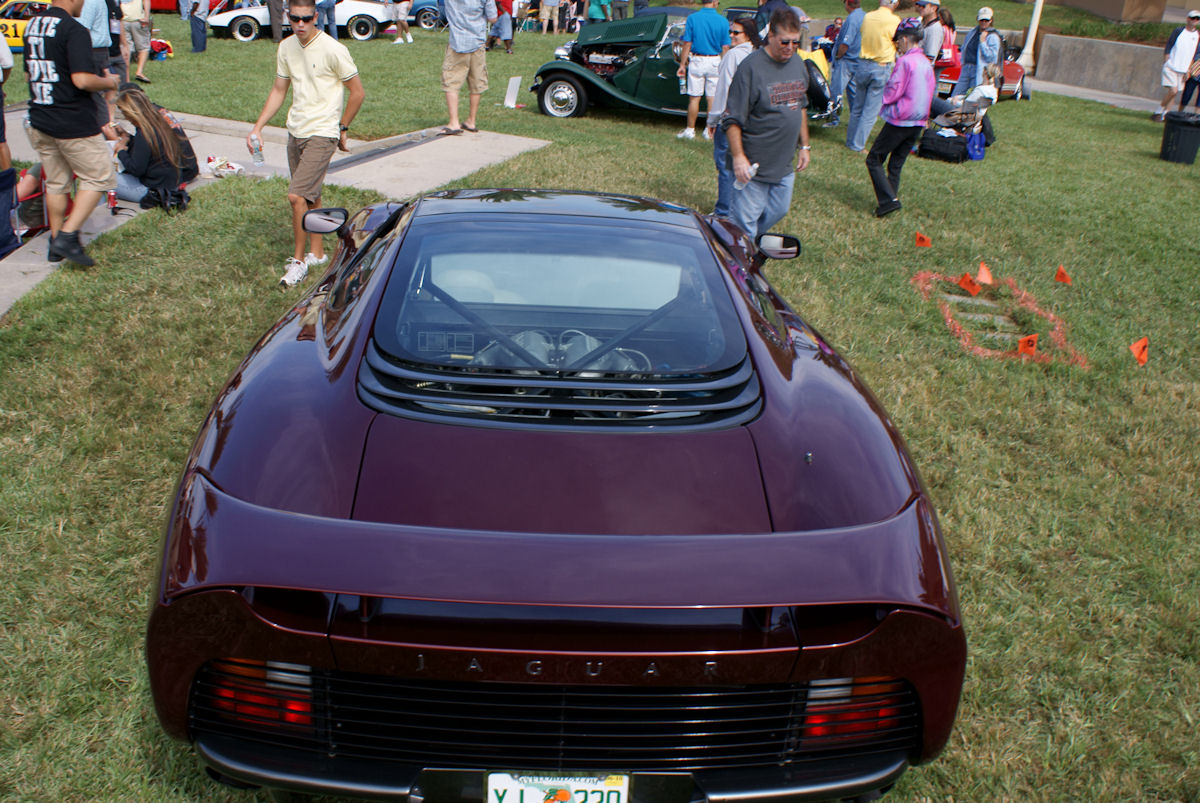
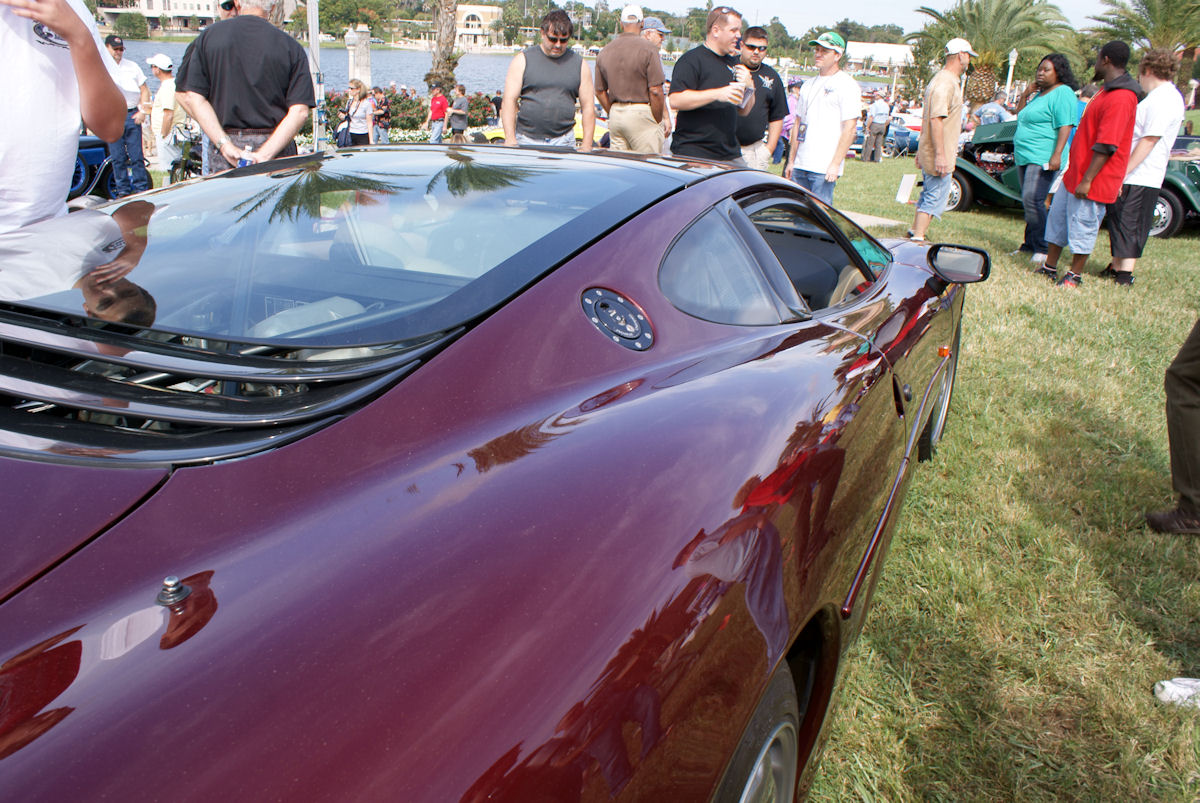
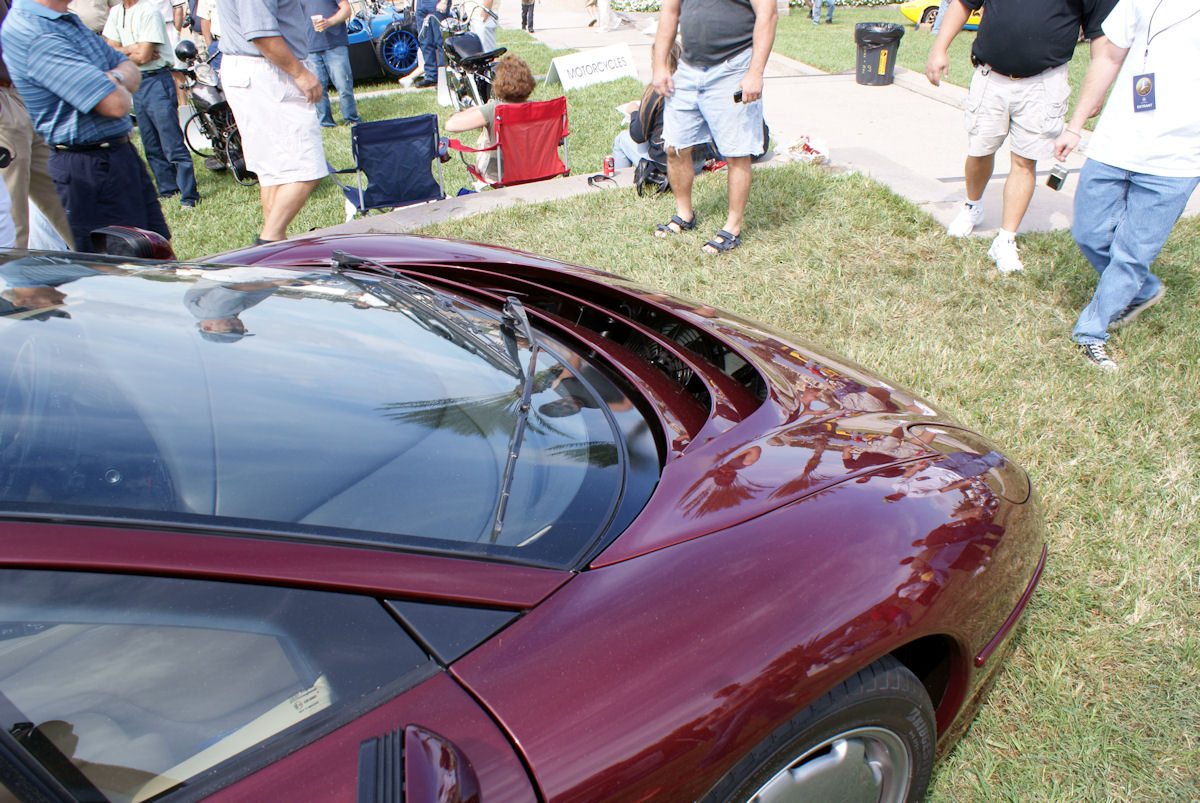
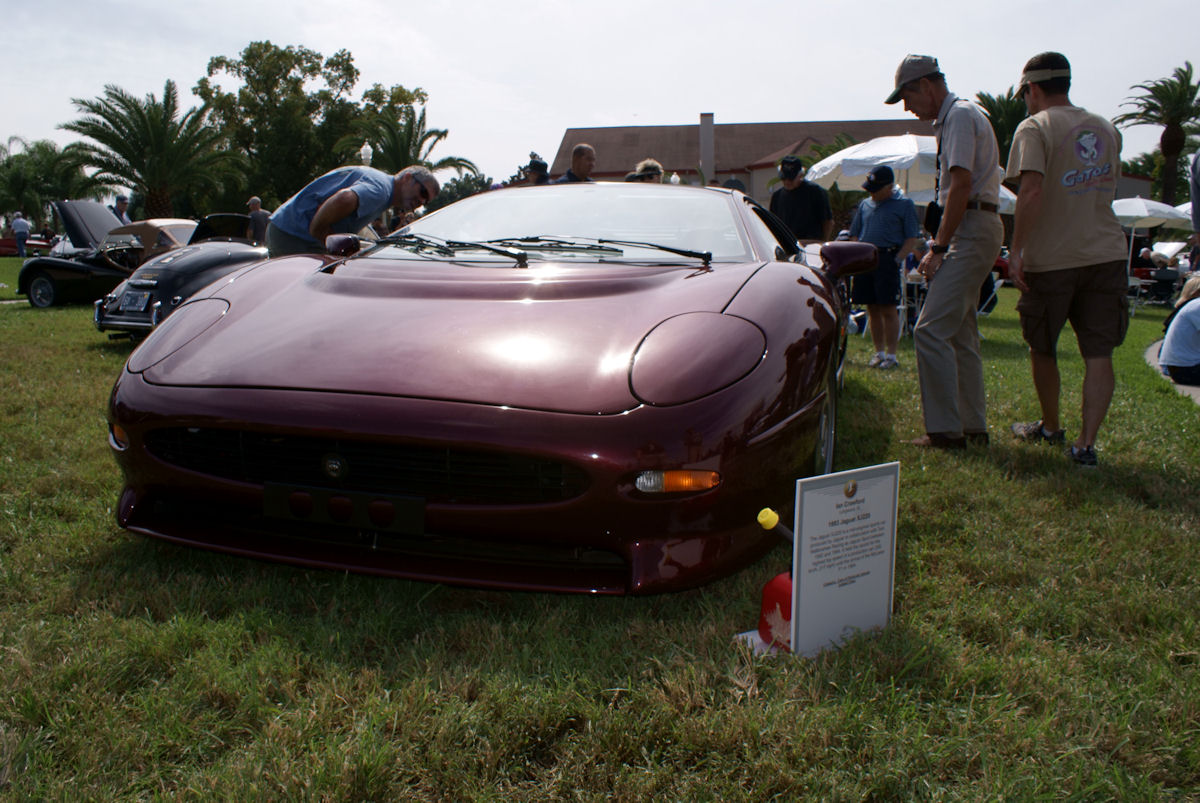
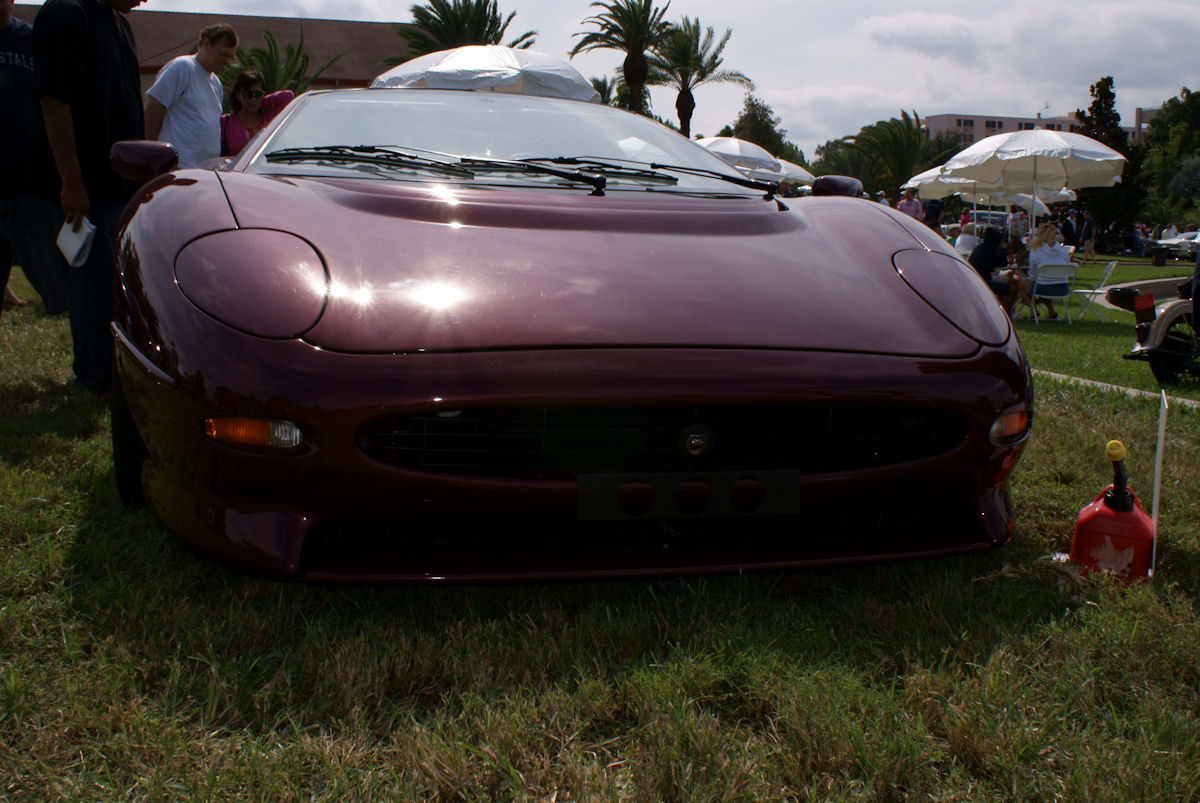
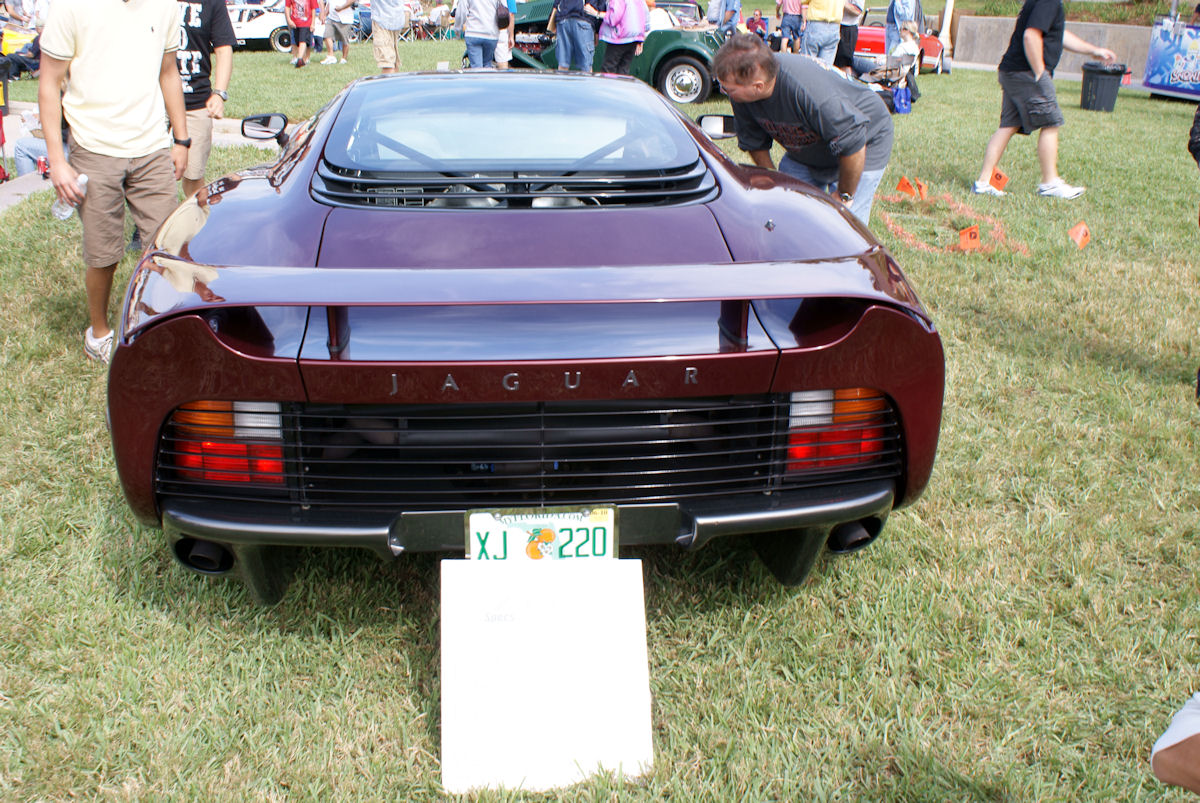
The gallery makes the design easier to read. Start with the front three-quarter view, then compare the nose, rear deck and side photographs. The low roof and long body create the visual impression of a car stretched around its occupants and mechanical components. The covered headlamps keep the front surfaces visually clean.
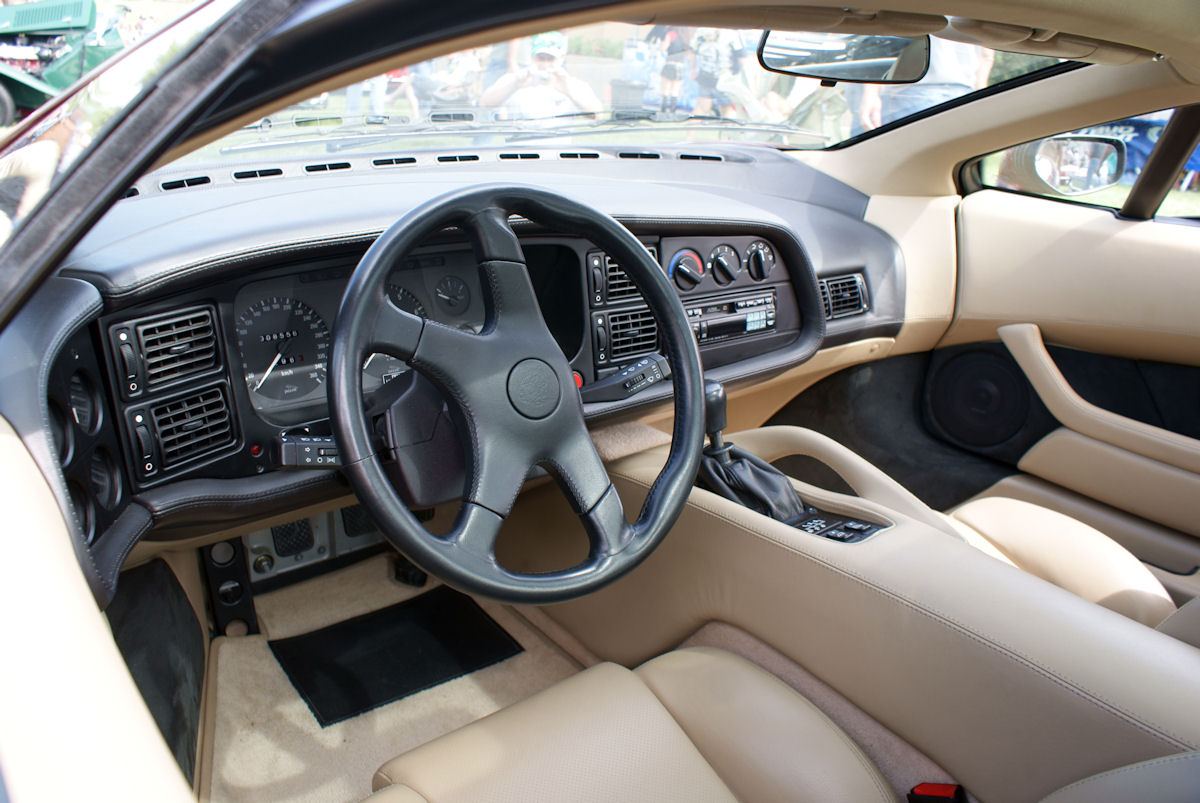
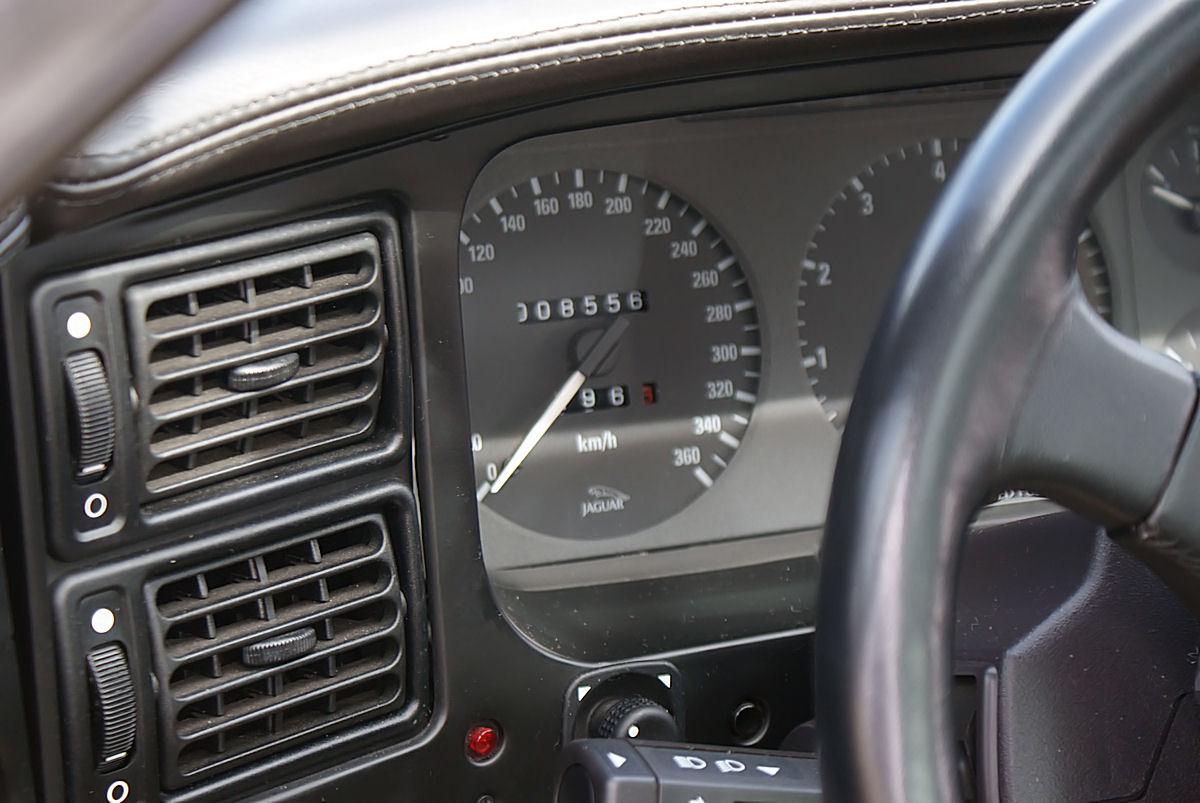
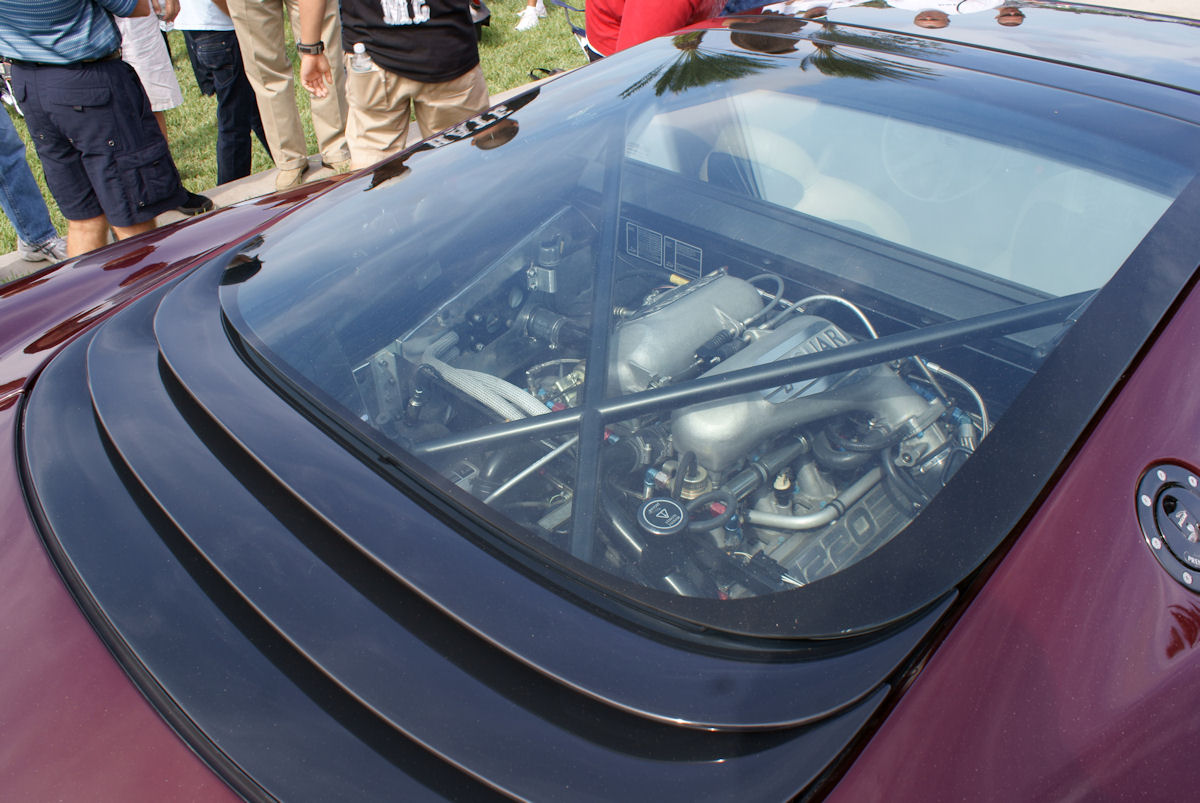
Interior photographs show a much more conventional relationship between steering wheel, instruments and driver than the exterior might suggest. The engine-bay and vent details are useful companions: they connect the car’s dramatic rear bodywork with the machinery and cooling provisions beneath it.
How fast was the Jaguar XJ220?
Different published speeds need context. The Jaguar Daimler Heritage Trust reports approximately 213 mph (343 km/h) in independent period road tests. Jaguar Classic’s workshop history also records a 217.1 mph Nardò run with Martin Brundle.
Those references describe different test records; they should not be presented as one interchangeable measurement. Test configuration and conditions matter, especially when discussing an early-1990s speed claim. The important historical point is that the XJ220 belonged at the leading edge of production-car performance.
Production numbers and a difficult market
Jaguar Sport built the cars at Bloxham in Oxfordshire. The Heritage Trust records 281 examples completed between 1992 and 1994. Jaguar Classic’s workshop feature uses 282, so sources are not completely consistent. This article follows the Trust’s production tally and makes that difference explicit.
The timing was difficult. The Road Rat history hosted by the Heritage Trust describes a market in which recession and falling supercar prices undermined speculative demand. Disputes with depositors became part of the story, and some completed cars remained unsold after production ended. That commercial background explains its reception without reducing the engineering to a sales statistic.
XJ220C racing history and Le Mans
The road car must be distinguished from the competition-prepared XJ220C. TWR Jaguar entered three cars at Le Mans in 1993. The number 50 car, driven by John Nielsen, David Brabham and David Coulthard, finished first in its GT category on the road after completing 306 laps.
However, the result did not stand. The Heritage Trust’s detailed account explains the catalytic-converter eligibility issue and the subsequent disqualification, including the timing of the appeal. Describing the XJ220 as an unqualified 1993 Le Mans class winner would leave out the decisive part of the result.
Living with an XJ220 today
Maintenance history matters as much as mileage. Jaguar Classic describes annual servicing and a six-year replacement interval for the motorsport-style bladder fuel cell in its workshop feature. An owner should confirm the applicable schedule and current requirements with the specialist responsible for the particular car.
Before assessing an example, establish its identity, service records and any changes from original specification. Ask about fuel-cell age, belts, cooling, tyres and evidence of long periods without use. These are inspection topics, not a substitute for a specialist assessment. The car’s rarity makes careful documentation especially valuable.
Where it fits among supercars
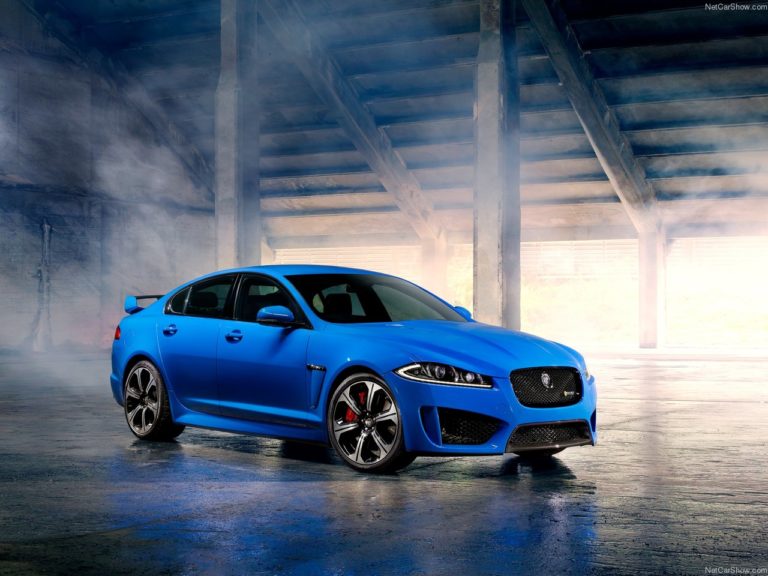
For another contemporary approach to an exceptional road car, read our 1992 McLaren F1 profile. To follow the development of the exotic-car idea into a later era, explore the 2011 Pagani Huayra. Our Jaguar XFR-S article offers a different view of Jaguar performance in a four-door format.
Jaguar XJ220 photo gallery
Ten photographs of a representative 1993 road car at the 2009 Lake Mirror Classic. Select an image to view the full photograph. All photographs: Valder137, CC BY 2.0, via Wikimedia Commons. Images are displayed proportionally.
Watch: three Jaguar XJ220 videos
Jay Leno’s Garage: 1993 Jaguar XJ220
A detailed look at a representative road car and its background.
Top Gear: Chris Harris on the Ferrari F40 and Jaguar XJ220
A comparison of two very different supercar design philosophies.
evo: Jaguar XJ220 versus Jaguar XKR-S
Chris Harris explores the relationship between Jaguar performance cars from different eras.
Frequently asked questions
Did the Jaguar XJ220 have a V12?
The 1988 concept did. Production road cars used a twin-turbocharged V6 and rear-wheel drive.
How many XJ220s were made?
The Heritage Trust records 281 built from 1992 to 1994. Jaguar Classic uses 282 in a separate feature; the discrepancy is noted above.
Is every XJ220 photograph a 1992 car?
No. This gallery documents a representative 1993 example. It illustrates the production design without assigning an incorrect build year.
Is the XJ220C the same as the road car?
No. The C identifies the competition-prepared derivative. Racing results and specifications should be kept separate from those of the road model.
.jpg)
.jpg)
.jpg)
.jpg)
.jpg)
.jpg)
.jpg)
.jpg)
.jpg)
.jpg)