
Views: 0
The History of Lamborghini’s V12 Engine: From 1963 to the Hybrid Era
Automotive History | Lamborghini | Engineering & Performance


4
For more than six decades, the V12 engine has been the mechanical heart of Lamborghini. From the elegant grand tourers of the 1960s to the revolutionary Miura, the dramatic Countach, and the electrified Revuelto, Lamborghini’s twelve-cylinder engine has helped define the character of the Italian supercar.
Its history is not simply a story of increasing horsepower. It is one of engineering ambition, innovative design, spectacular performance, and a distinctive exhaust note that generations of enthusiasts have come to recognize.
1. The Birth of the Lamborghini V12 (1963–1964)
Lamborghini was founded in 1963 by Ferruccio Lamborghini, who wanted to create sophisticated grand touring cars capable of competing with the established Italian marques.
Engineer Giotto Bizzarrini developed the company’s original 3.5-litre V12, a high-revving design with racing ambitions. Paolo Stanzani subsequently helped adapt it for road use.
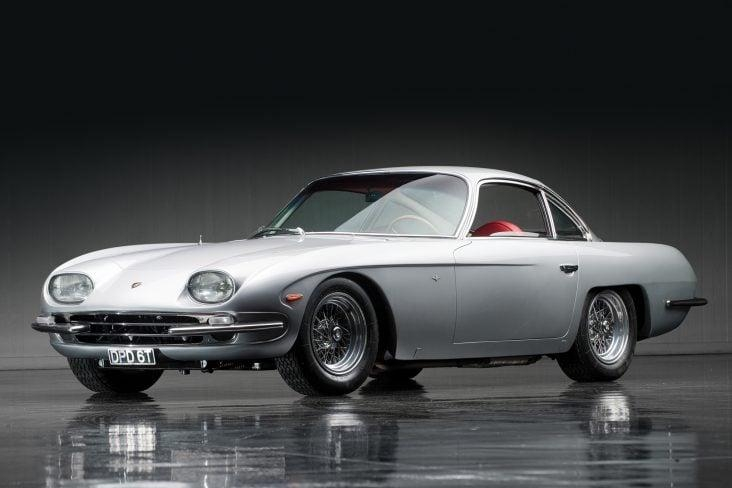
The engine appeared in Lamborghini’s first production car, the Lamborghini 350 GT, unveiled in 1964.
The production version delivered approximately 280 metric horsepower (CV), establishing the technical foundation for Lamborghini’s future models.
Lamborghini.com
+1
2. The Miura Revolution (1966–1973)


6
The arrival of the Lamborghini Miura in 1966 transformed the automotive world.
Unlike Lamborghini’s earlier front-engined grand tourers, the Miura positioned its 4.0-litre V12 transversely behind the passenger compartment. This innovative packaging produced an exceptionally low, dramatic sports car that is widely considered one of the first modern supercars.
The Miura evolved through three principal versions:
- P400: approximately 350 CV
- P400 S: approximately 370 CV
- P400 SV: approximately 385 CV
The Miura demonstrated that a V12 could deliver far more than comfortable, high-speed touring. It could become the centerpiece of an extraordinary mid-engined performance machine.
Lamborghini.com
+1
3. The Countach Era (1974–1990)


5
With the Lamborghini Countach, Lamborghini introduced one of the most recognizable automotive designs ever created.
The Countach retained the mid-mounted V12 philosophy but installed its engine longitudinally, creating a different mechanical arrangement from the Miura.
Throughout its production life, the engine evolved considerably:
| Version | V12 displacement |
|---|---|
| Countach LP400 | 3.9 L |
| Countach 5000 S | 4.8 L |
| Countach 5000 Quattrovalvole | 5.2 L |
The Quattrovalvole introduced four valves per cylinder and produced up to 455 CV in European carbureted specification.
The Countach also helped establish Lamborghini’s signature wedge-shaped styling, scissor doors, and uncompromising supercar personality.
Lamborghini.com
+1
4. The Diablo: More Power and All-Wheel Drive (1990–2001)

The Lamborghini Diablo arrived in 1990, bringing the V12 into a new era of speed.
The original Diablo featured a 5.7-litre engine producing approximately 492 CV, while subsequent models expanded displacement to 6.0 litres.
The Diablo VT introduced all-wheel drive into Lamborghini’s flagship supercar family, allowing the growing engine output to be used more effectively.
Later high-performance derivatives demonstrated how far the original V12 architecture could be developed.
Lamborghini.com
+1
5. Murciélago: The Last Chapter of the Original V12 Family (2001–2010)

Unveiled in 2001, the Lamborghini Murciélago marked an important transition under Lamborghini’s Audi-era ownership.
Its original 6.2-litre V12 generated 580 CV. The engine grew to 6.5 litres in later versions, culminating in the Murciélago LP 670-4 SuperVeloce with 670 CV.
The Murciélago represented the final production evolution of the V12 architecture that traced its origins back to the 1960s.
It combined Lamborghini’s traditional naturally aspirated power delivery with increasingly advanced chassis engineering, electronics, and all-wheel-drive systems.
Lamborghini.com
6. Aventador: An Entirely New V12 (2011–2022)


The launch of the Lamborghini Aventador in 2011 was a major milestone.
For the first time in decades, Lamborghini introduced an entirely new production V12 engine design rather than continuing to develop the original Bizzarrini-derived family.
The 6.5-litre naturally aspirated engine debuted with 700 CV, paired with a carbon-fibre monocoque chassis and all-wheel drive.
Further development produced even more powerful versions, including the Aventador SVJ and the final Ultimae.
The Aventador Ultimae marked the end of Lamborghini’s non-hybrid, naturally aspirated V12 flagship production era.
Lamborghini.com
+1
7. Revuelto: The V12 Enters the Hybrid Age (2023–Present)


5
The Lamborghini Revuelto introduced in 2023 opened another chapter.
Rather than abandon its most celebrated engine configuration, Lamborghini developed a new 6.5-litre naturally aspirated V12 that works alongside three electric motors.
825 CV
V12 engine alone
1,015 CV
Combined system
2.5 s
0–100 km/h
The Revuelto also features an eight-speed dual-clutch gearbox, electric all-wheel drive, and the ability to operate using electric power alone in suitable conditions.
Its hybrid system delivers greater performance while preserving the high-revving character that has always been central to Lamborghini’s V12 identity.
Lamborghini.com
+1
Lamborghini V12 Engine Evolution: 1964–2026
Evolution of V12 Engine Output
Selected production models; approximate metric horsepower (CV). Revuelto figure represents the combustion engine alone, excluding electric assistance.
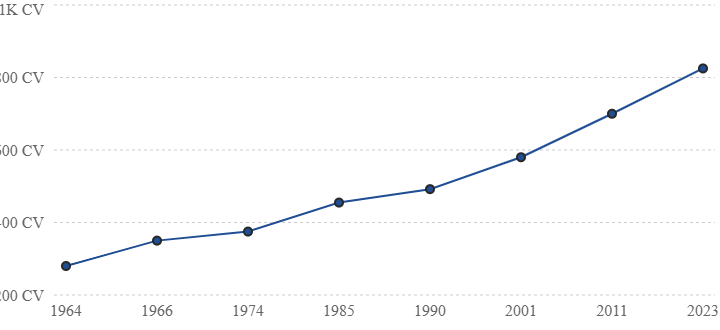
Representative production-model specifications; power varies by variant and market.
What Makes Lamborghini’s V12 Special?
There are several reasons Lamborghini has maintained its commitment to the twelve-cylinder configuration.
Mechanical balance: A 60-degree V12 can achieve excellent inherent balance, contributing to smooth power delivery even at high engine speeds.
Naturally aspirated response: Lamborghini’s flagship V12 engines have traditionally avoided turbocharging, prioritizing immediate throttle response and progressive power delivery.
Sound: Twelve cylinders firing in rapid succession create a smooth yet intense exhaust character, especially as the engine approaches its high-rpm limits.
Engineering identity: More than an engine layout, the V12 has become a symbol of Lamborghini’s commitment to distinctive, high-performance flagship vehicles.
Three Interesting Facts
1. Lamborghini’s first V12 engine was originally developed with competition-inspired performance in mind, even though Ferruccio Lamborghini wanted sophisticated road cars.
2. The Lamborghini LM002 off-road vehicle used a Countach-derived V12, proving the engine’s versatility beyond traditional supercars.
3. The Revuelto retains twelve naturally aspirated cylinders despite introducing plug-in hybrid technology—demonstrating how electrification and traditional performance engineering can coexist.
Conclusion: A Legacy That Continues
The Lamborghini V12 has survived changing owners, shifting automotive trends, increasingly demanding regulations, and major technological revolutions.
From the 350 GT to the Miura, Countach, Diablo, Murciélago, Aventador, and Revuelto, each generation has reinterpreted the same core philosophy: exceptional performance and an unmistakable driving character.
The transition to hybrid power has not ended that legacy. Instead, it has given the V12 a new technological foundation for the modern era.
Sources and Further Reading
The history and specifications above are primarily based on Lamborghini’s official publications, including The Legend of the V12 Engine, Lamborghini Historical Milestones, and The Murciélago V12 History.
Suggested SEO title: Lamborghini V12 Engine History: 1963 to RevueltoSuggested URL slug: lamborghini-v12-engine-historyMeta description: Explore the history of Lamborghini’s legendary V12 engine, from the 350 GT and Miura to the Countach, Aventador and hybrid Revuelto.