
Views: 37
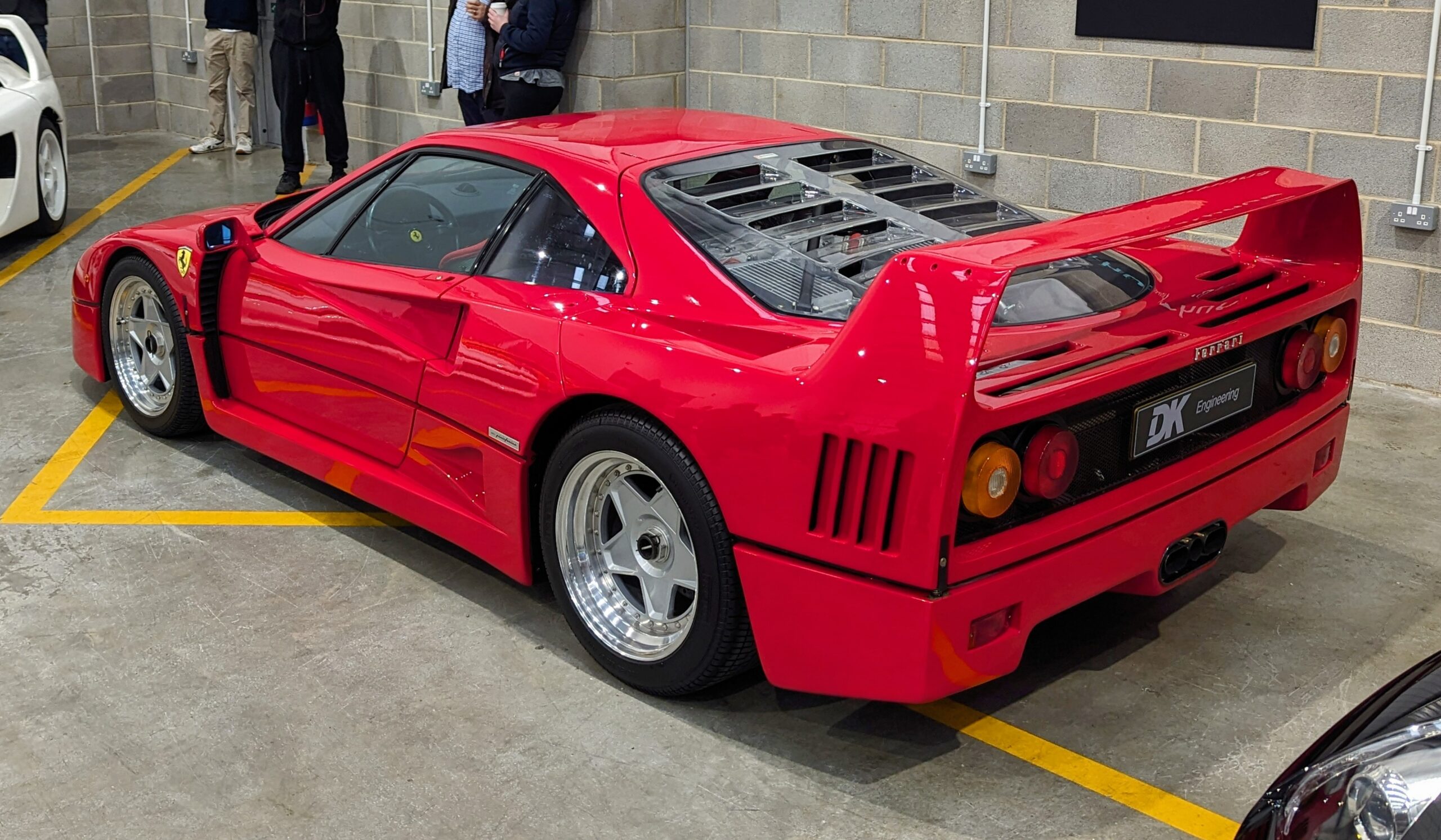
Introduced in 1987, the Ferrari F40 marked the company’s 40th anniversary with an unusually focused road-car brief. It followed the 288 GTO in the modern flagship family, carrying turbocharging into a new decade while stripping away comfort and electronic aids in pursuit of a more immediate connection between driver and machine. The result became one of Ferrari’s defining road cars.
F40 at a glance
| Launch date | 21 July 1987, Maranello |
| Production period | 1987–1992 |
| Body style | Two-door, two-seat berlinetta coupé |
| Engine & drivetrain | 2,936.25 cc, 90° twin-turbo V8; longitudinal rear-mid layout |
| Power | 478 cv at 7,000 rpm |
| Torque | 577 Nm at 4,000 rpm |
| Transmission | Five-speed manual |
| Dry weight | 1,100 kg (Ferrari figure) |
| Performance | 0–100 km/h in 4.1 s; maximum 324 km/h |
| Production status | Completed historic model |
| Production total | About 1,311–1,315 road cars; published totals differ by source |
| Variants | F40 road car; LM and Competizione were separate competition derivatives |
| Predecessor / successor | 288 GTO · Successor: F50 |
An anniversary expressed through engineering
The F40 developed ideas explored by the 288 GTO and its Evoluzione prototypes into a road-going flagship. Ferrari used a tubular steel structure with composite body panels, including Kevlar and carbon-fibre elements, to pursue low mass. The twin-turbo V8 delivered 577 Nm, while the deliberately pared-back cabin and the absence of electronic driver aids gave the car a demanding, mechanical character.
Those construction and equipment choices help explain the F40 better than its anniversary name alone. Ferrari’s quoted 1,100 kg figure is a dry-weight claim, so it should not be compared directly with a ready-to-drive weight from another source. The same care applies to performance: the 324 km/h maximum belongs to the road car, not the LM or Competizione race programmes.
From turbo V8 to naturally aspirated V12
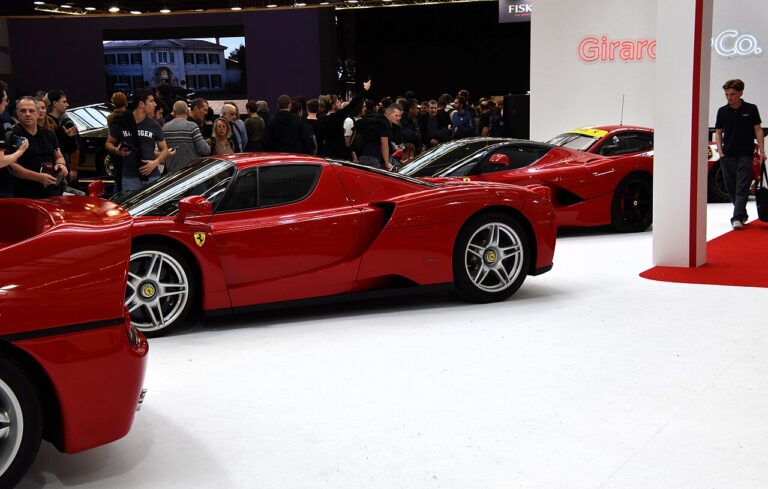
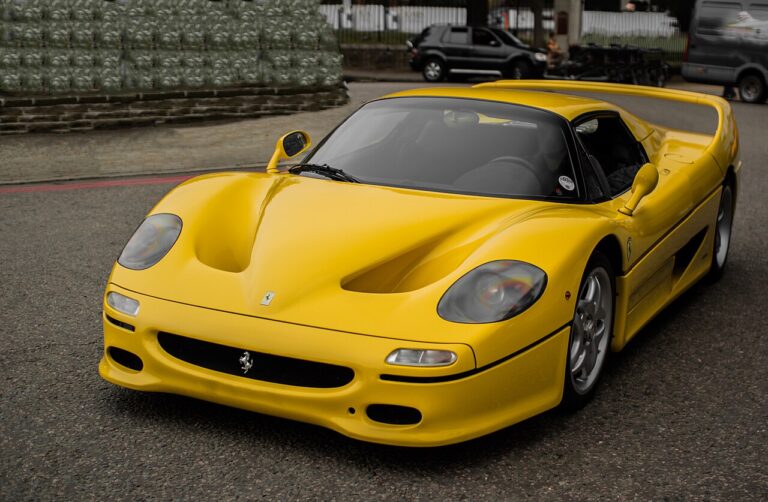
The F40 is the middle chapter of a three-car progression: the GTO established the limited-run turbo flagship, while the F50 took the series in a different direction with a naturally aspirated V12 and a carbon-fibre monocoque. The later Enzo continued the technology-transfer theme. Compare the 288 GTO, F50 and Enzo to follow the changes across the family.
Video and photo credits
Ferrari F40 · Photo by Calreyn88, CC BY 4.0. Image source · License.
Ferrari’s F40 history and image feature.
Watch the F40 feature from Jay Leno’s Garage on YouTube.
Official sources
Ferrari: Enzo’s Dream; Ferrari F40 historical specifications; Ferrari: Blood Sisters.
Explore the flagship family
Follow the Ferrari flagship timeline, then continue to the F50, Enzo, LaFerrari and F80.
Published 27 September 2026. Power is shown in metric cv. Performance figures are manufacturer claims, not independent test results.
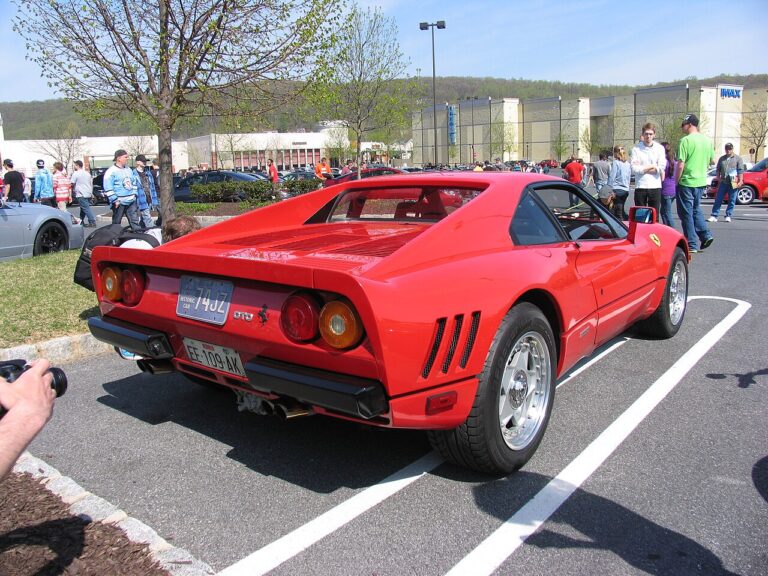

[…] F40 […]
[…] Ferrari F40: Twin-Turbo V8 Specs and 40th Anniversary History […]
[…] Ferrari F40: Twin-Turbo V8 Specs and 40th Anniversary History […]