
Views: 43
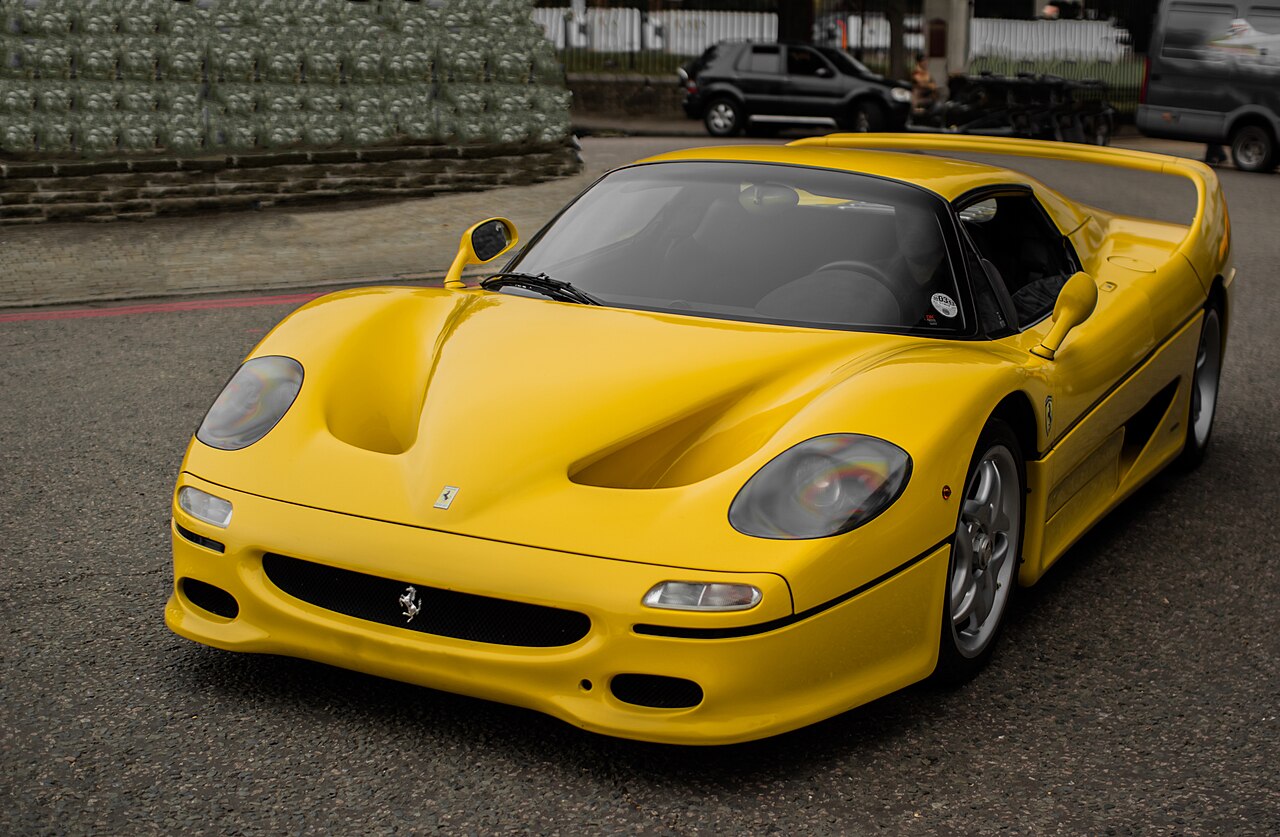
Presented in 1995, the Ferrari F50 brought a naturally aspirated V12 into the flagship line and made the engine part of the car’s structure. Its removable roof, carbon-fibre monocoque and manual gearbox created a very different experience from the turbocharged F40 before it. Ferrari described the F50 as a road car that carried Formula 1 engineering into a usable, limited-production form.
F50 at a glance
| Launch date | 9 March 1995, Geneva Motor Show |
| Production period | 1995–1997 |
| Body style | Two-seat berlinetta with removable Targa roof panel |
| Engine & drivetrain | 4,698.50 cc naturally aspirated 65° V12; longitudinal rear-mid layout |
| Power | 520 cv at 8,500 rpm |
| Torque | 471 Nm at 6,500 rpm |
| Transmission | Six-speed manual |
| Dry weight | 1,230 kg |
| Performance | 0–100 km/h in 3.87 s; maximum 325 km/h |
| Production status | Completed historic model |
| Production total | 349 road cars |
| Variants | F50 road car; F50 GT was a separate competition project |
| Predecessor / successor | F40 · Successor: Enzo |
An engine that helped carry the car
Ferrari says the V12 derived directly from Formula 1 and used five valves per cylinder. In the F50 it was not simply mounted inside the chassis: the engine acted as a stressed structural element behind the carbon-fibre monocoque. Push-rod suspension and extensive aerodynamic development continued that engineering theme, while the six-speed manual kept the driver closely involved.
The specification also explains the F50’s distinctive compromise. The removable Targa panel opened the cabin to the elements, but the car retained the central structure required by its chassis concept. Ferrari omitted ABS and power steering, reinforcing the F50’s direct, demanding character. The dry-weight figure of 1,230 kg is a manufacturer measurement and should be compared only with other dry-weight figures.
Why the F50 arrived before the anniversary
The F50 debuted two years ahead of Ferrari’s fiftieth anniversary, so the badge does not mean it launched in 1997. Ferrari built 349 examples, a number the company says was set one below demand from the intended market. The road car’s production run is distinct from the F50 GT competition project, whose configuration and purpose were different.
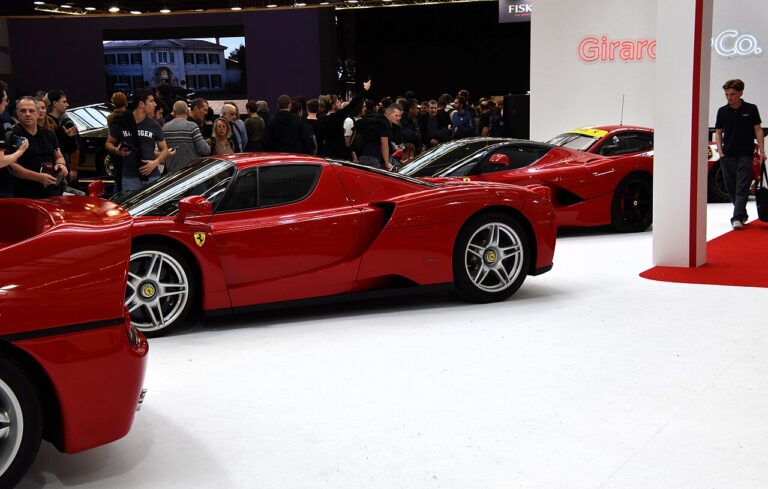
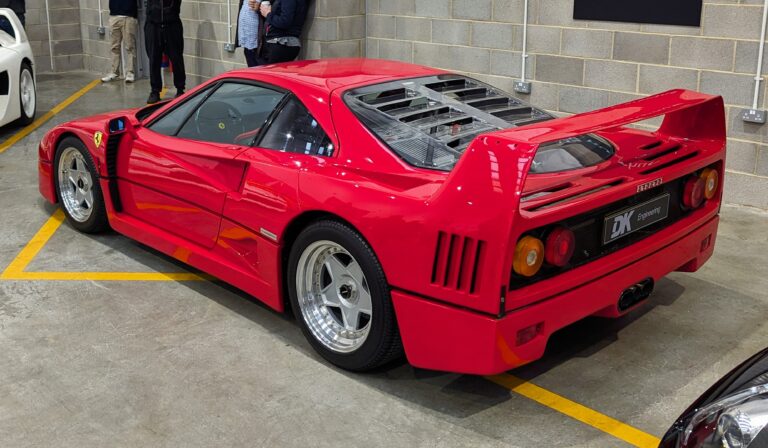
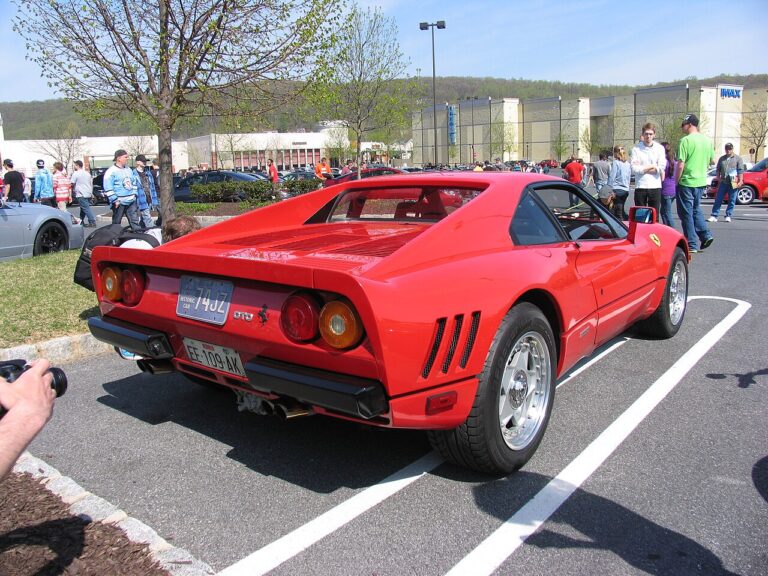
Within the flagship sequence, the F50 is the pivot from the F40’s turbocharged V8 to the Enzo’s more electronically managed V12. Compare the 288 GTO, F40 and Enzo to follow that change.
Video and photo credits
Ferrari F50 · Photo by Ben via Wikimedia Commons, CC BY-SA 2.0. Image source · License.
Ferrari’s F50 image and specification feature.
Watch the F50 feature from Davide Cironi on YouTube.
Official sources
Ferrari F50 technical specifications; Ferrari F50 Legacy Tour history; Ferrari: F1 in a road car.
Explore the flagship family
Follow the Ferrari flagship timeline, then continue to the Enzo, LaFerrari and F80.
Published 27 September 2026. Power is shown in metric cv. Performance figures are manufacturer claims, not independent test results.
.jpg)
[…] Ferrari F50: V12 Specs, 349-Car Production and Formula 1 Origins […]
[…] Ferrari F50: V12 Specs, 349-Car Production and Formula 1 Origins […]
[…] Ferrari F50: V12 Specs, 349-Car Production and Formula 1 Origins […]