
Views: 39
The Enzo Ferrari brought its founder’s name to the flagship road car unveiled in 2002. It followed the F50, pairing a naturally aspirated V12 with a carbon-fibre chassis, carbon-ceramic brakes and Formula 1-inspired controls. Ferrari’s aim was to bring racing-derived materials and systems together in a road car that remained focused on driver input.
Enzo at a glance
| Launch date | Paris Motor Show, October 2002 |
| Production period | Original series, 2002–2004; additional charity car built in 2005 |
| Body style | Two-door, two-seat berlinetta coupé |
| Engine & drivetrain | 5,998.80 cc naturally aspirated 65° V12; longitudinal rear-mid layout |
| Power | 660 cv at 7,800 rpm |
| Torque | 657 Nm at 5,500 rpm |
| Transmission | Six-speed F1-style automated manual with paddle shifts |
| Dry weight | 1,255 kg |
| Performance | 0–100 km/h in 3.65 s; maximum speed over 350 km/h |
| Production status | Completed historic model |
| Production total | 399 original cars plus one later charity example |
| Variants | Enzo road car; FXX was a separate track-only programme |
| Predecessor / successor | F50 · Successor: LaFerrari |
Why Ferrari quotes both 399 and 400
Ferrari planned an original series of 399 cars. In 2005, a further example was built and given to Pope John Paul II; it was auctioned for humanitarian relief. That is why sources may refer to 399 production cars or 400 Enzos when the later charity car is included. Keeping those counts separate avoids implying that the extra car belonged to the initial allocation.
Race-derived engineering, organised for the road
Ferrari’s technical story centres on the carbon-fibre and honeycomb composite chassis, a naturally aspirated V12, push-rod suspension and carbon-ceramic brake discs. Paddle-operated gear selection and integrated electronic systems brought a new level of control to the flagship. The 660 cv is combustion-engine output; the Enzo is not a hybrid, and its figure should not be conflated with later combined powertrain ratings.
The Enzo’s 6.0-litre engine and electronic control systems mark a clear shift from the F50’s intentionally raw, manually shifted approach. The track-only FXX extended the Enzo programme for selected clients, but it was not a road-car trim or an additional Enzo variant for ordinary performance comparisons.
From F50 to LaFerrari
In the flagship sequence, the Enzo sits between the naturally aspirated F50 and LaFerrari, the first hybrid in this line. The later F80 continues the technology-transfer theme with a different hybrid architecture. Compare the F50, LaFerrari and F80 alongside this car to see how Ferrari’s flagship formula changed.
Video and photo credits
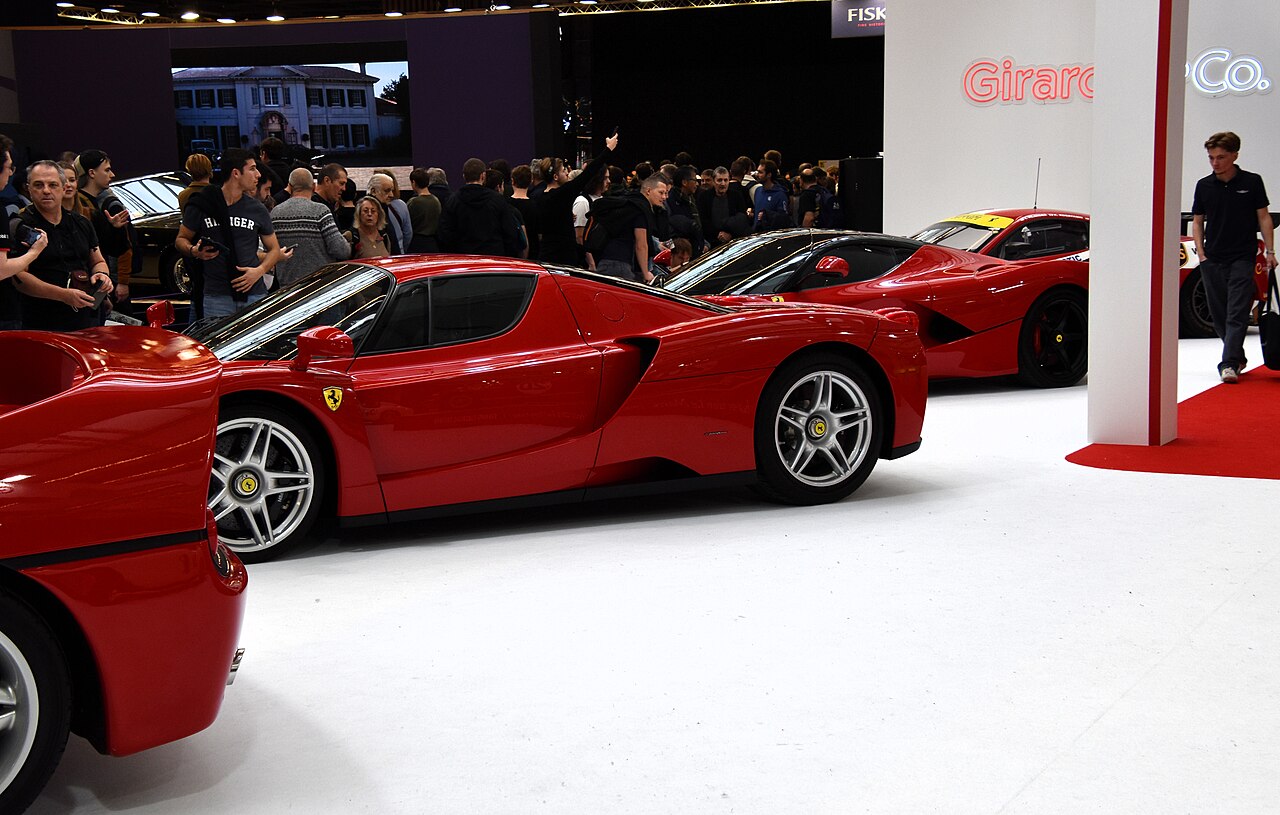
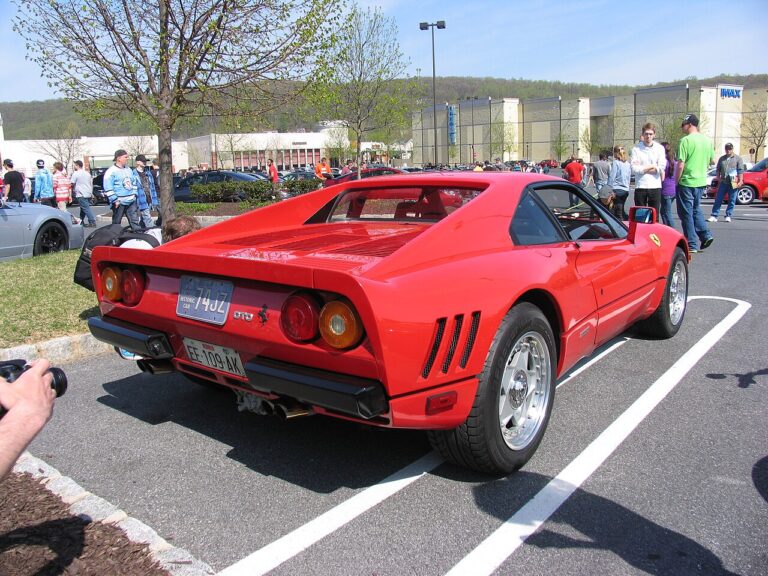
Ferrari Enzo (2004) · Photo by Charles via Wikimedia Commons, CC0. Image source · License.
Ferrari’s Enzo history and image feature.
Watch the full Enzo review on YouTube.
Official sources
Ferrari Enzo technical archive; Ferrari: Homage to the Founder; Ferrari: All in the Name; Ferrari’s account of the FXX programme.
Explore the flagship family
Follow the Ferrari flagship timeline, then continue to LaFerrari and the F80.
Published 27 September 2026. Power is shown in metric cv. Performance figures are manufacturer claims, not independent test results.
_(55081629415).jpg)
[…] Ferrari Enzo: V12 Specs, Production Numbers and Flagship History […]
[…] Ferrari Enzo: V12 Specs, Production Numbers and Flagship History […]