
Views: 4
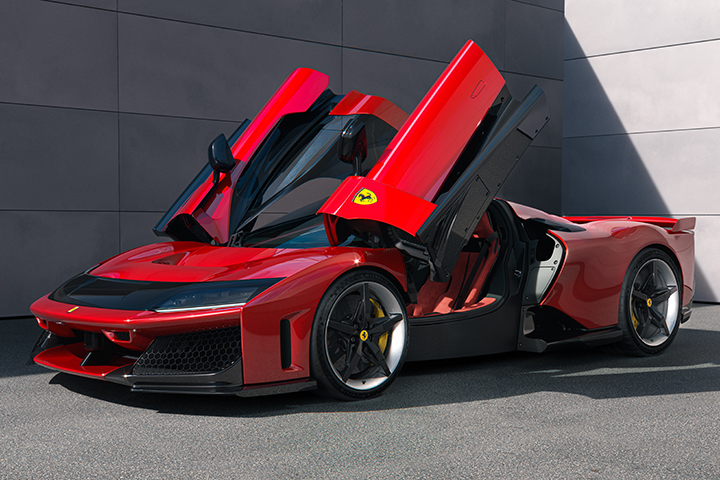
The Ferrari F80 brings a new powertrain to the marque’s limited-series flagship family: a twin-turbo V6 supported by an electric front axle and a rear electric motor. Revealed on 17 October 2024, it follows the LaFerrari with a focus on hybrid performance, active aerodynamics and technology developed through Ferrari’s racing programmes.
Ferrari F80 at a glance
| Launch date | 17 October 2024, Maranello. |
| Production period | 2025–2027 programme; the announced end year is 2027. |
| Production status | In production / customer deliveries underway. Ferrari reported F80 shipments ramping up in Q1 2026. |
| Production volume | 799 examples planned. |
| Body style | Two-door, two-seat mid-engine coupé with a driver-focused “1+” cockpit. |
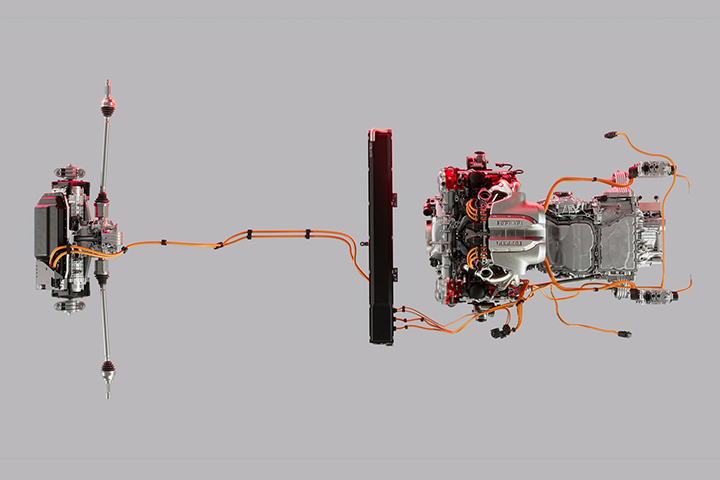
| Engine | 2,992 cc, 120° twin-turbo V6 with electrically assisted turbochargers. |
| Power | 1,200 CV combined: 900 CV from the engine plus 300 CV of hybrid contribution. Approximately 1,184 mechanical horsepower. |
| Engine torque | 850 Nm at 5,550 rpm; this is the combustion-engine figure. |
| Drivetrain | Electric front axle and rear hybrid assistance; eight-speed dual-clutch transmission. |
| Performance | Ferrari claims 0–100 km/h in 2.15 seconds, 0–200 km/h in 5.75 seconds and 350 km/h maximum speed. |
| Variants | This article covers the announced F80 coupé. No additional body variant is confirmed by the sources below. |
| Predecessor / successor | LaFerrari / no successor identified in the cited sources. |
Why a V6?
Ferrari chose an engine architecture closely related to the 499P endurance racer, rather than continuing the LaFerrari’s V12 layout. The V6 alone produces 900 CV. The hybrid system adds a further 300 CV to the combined maximum, while electric assistance at the turbochargers helps reduce lag. The result is a different engineering route to the flagship role, rather than a smaller version of the previous car.
Aerodynamics and the cockpit
Ferrari quotes 1,050 kg of downforce at 250 km/h. An adjustable rear wing works with the underfloor and front aerodynamic devices, while active suspension helps control the car’s attitude. Those figures describe a high-speed aerodynamic load, not the vehicle’s weight.
The asymmetric “1+” cabin places emphasis on the driver, but the F80 is homologated for two people. Its carbon-fibre chassis and tightly packaged cabin serve the performance brief without turning it into a single-seat racing car.
Official video
Pictures and official sources
Explore the exterior, cabin and technical images in the official Ferrari dealer F80 gallery and specifications. Further sources: Ferrari launch announcement, Ferrari’s 2025 design-award release, and Q1 2026 results and delivery status.
Continue exploring Ferrari
Compare its hybrid approach with our LaFerrari guide. For a different expression of Ferrari’s V12 tradition, explore the Purosangue and 500 Superfast.
Updated 27 September 2026. CV is metric horsepower. Performance and aerodynamic figures are manufacturer claims; this is a researched model guide, not a road test.
[…] See where this model fits in our Ferrari flagship timeline, from the 288 GTO through F40, F50 and Enzo to LaFerrari and F80. […]